
Warm Minimalism: Where Simplicity Meets Soul
Minimalism has long been associated with clean lines, open space, and a disciplined sense of restraint. At its foundation, it is rooted in the belief that removing excess allows clarity and intention to rise to the surface. In interior design, this often meant bright white walls, sharp contrasts, and streamlined silhouettes that emphasized structure above ornament. While visually compelling, these early interpretations sometimes felt distant or overly refined for everyday living.
Today, that perspective has softened. Warm Minimalism has emerged as a thoughtful evolution, blending simplicity with comfort and material richness. It maintains the calm and order of traditional Minimalism while introducing warmth, texture, and subtle depth. If you find yourself drawn to spaces that feel both composed and inviting, this may be a design approach worth exploring.
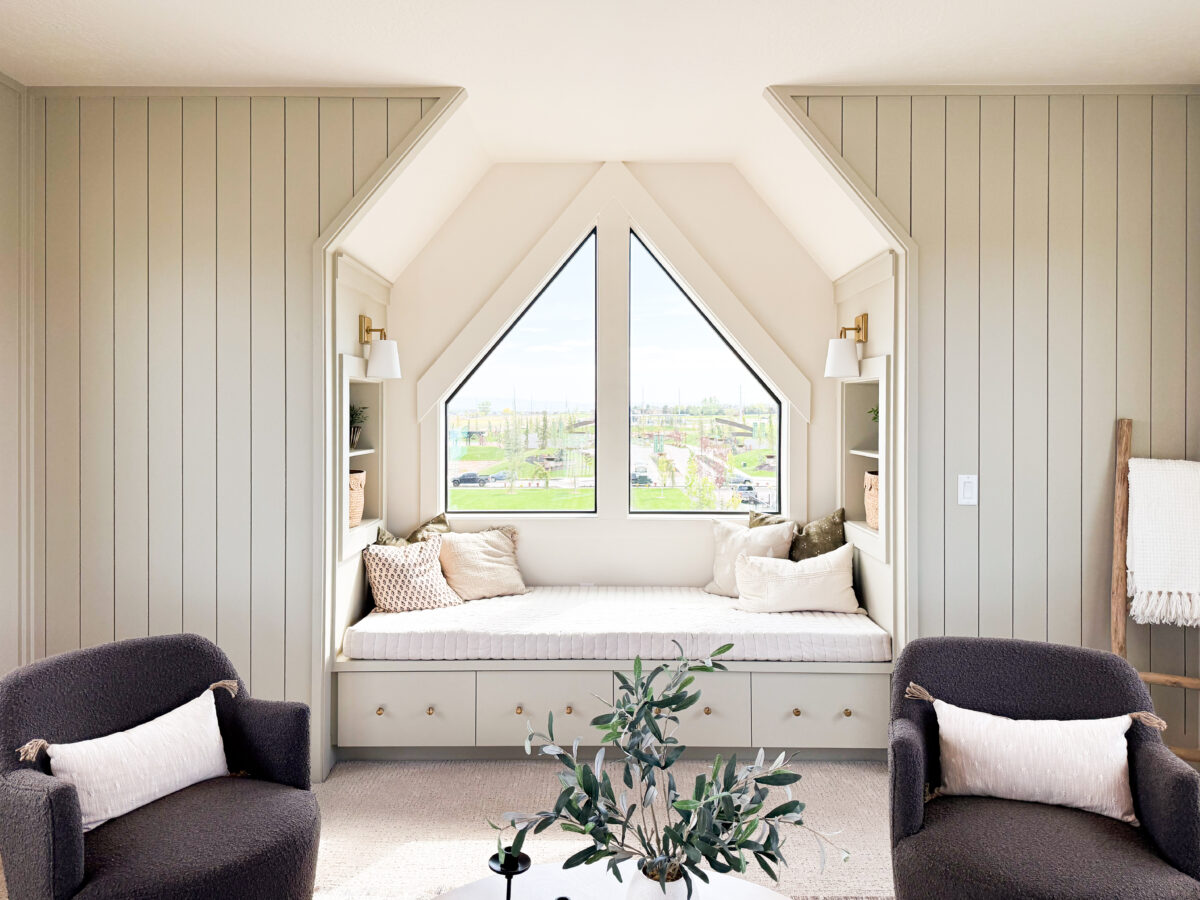
A Softer Approach to Minimalism
At its core, Warm Minimalism still honors the principle of “less, but better.” Clean lines remain, furnishings are intentional, and clutter is thoughtfully edited. The difference lies in how the space feels: soft, welcoming, and calm rather than stark or austere. Natural light, gentle color tones, and subtle textures combine to make rooms feel airy yet comforting. The atmosphere is less about perfection and more about creating spaces that feel approachable and livable.
Architectural details play an important role in achieving this softer approach. Moulding profiles are chosen for their restraint and proportion rather than ornate embellishment. Crown profiles such as 519, 505, or CV6 offer gentle curves and subtle shadow lines that add refinement without drawing unnecessary attention. Along the floor, baseboard profiles like 603S, B005, or 712 provide a clean architectural boundary, grounding the room while maintaining a streamlined look. When paired with simple shaker-style or flat panel doors, these moulding selections reinforce continuity and create a cohesive flow from room to room. The result is depth and dimension that feel intentional and balanced rather than decorative for decoration’s sake.
Even furnishings and accessories follow this softer direction. Rounded edges, organic shapes, and tactile materials balance linear architecture, while a few carefully selected statement pieces add character without clutter. When architectural profiles and door styles are thoughtfully coordinated, they quietly elevate the entire space. Warm Minimalism proves that simplicity does not need to feel stark. Instead, it can feel layered, warm, and deeply inviting.
The Power of a Warm Neutral Palette
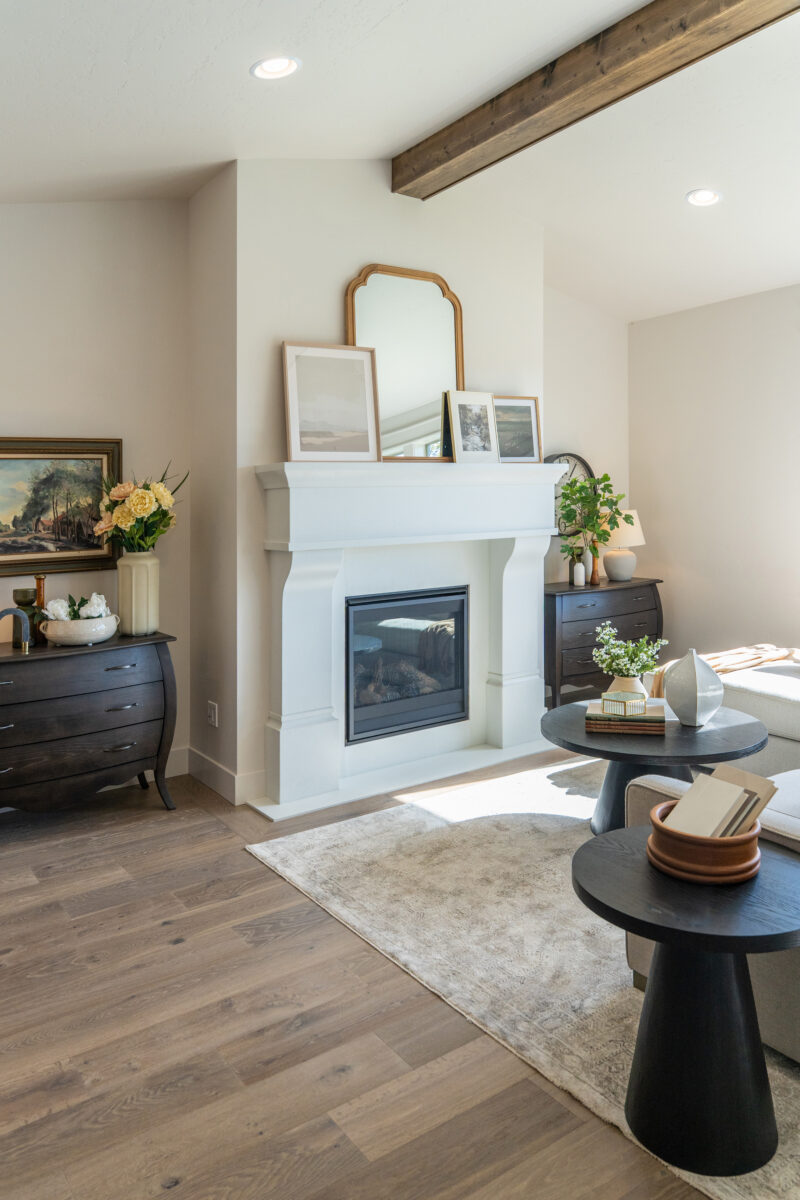
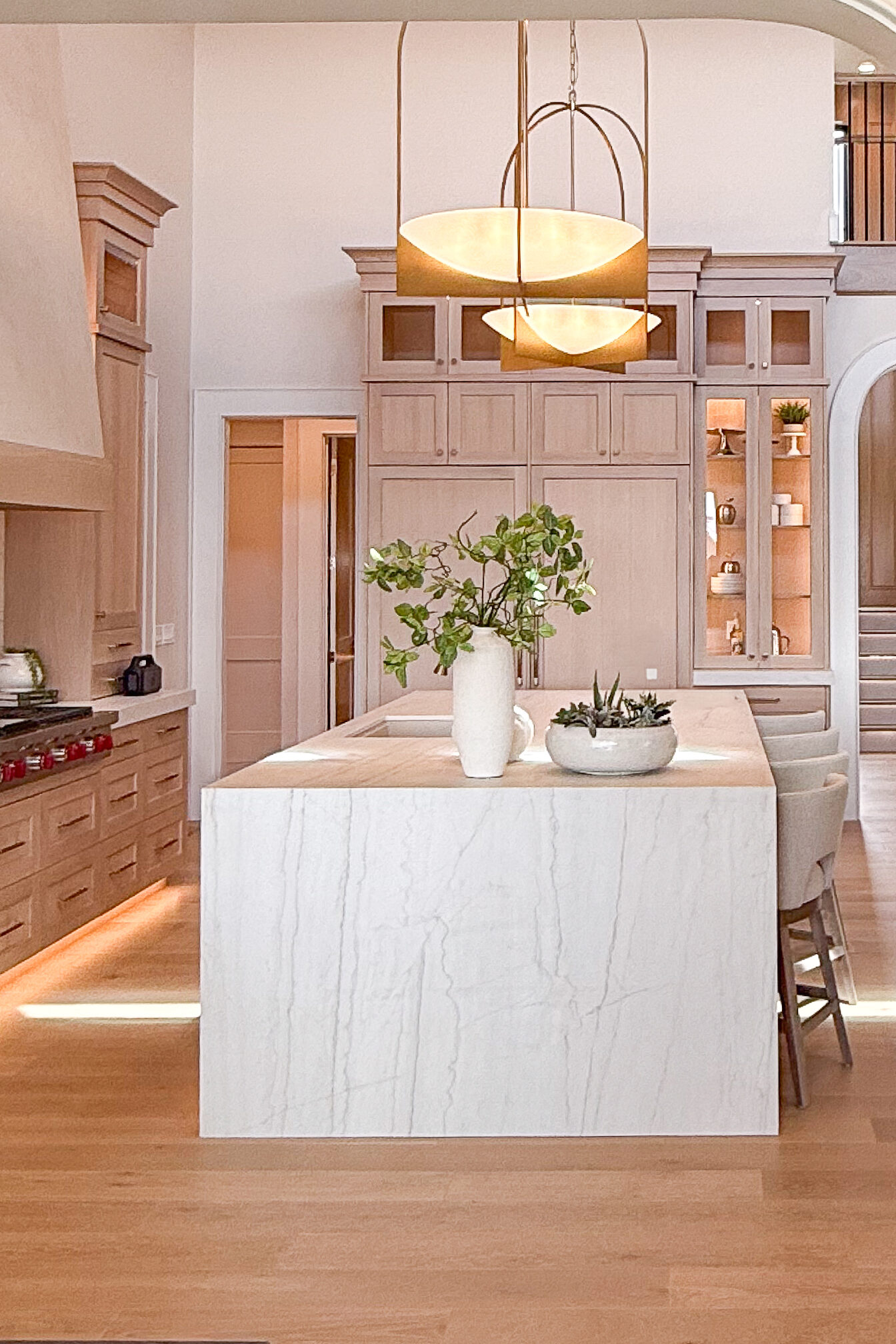
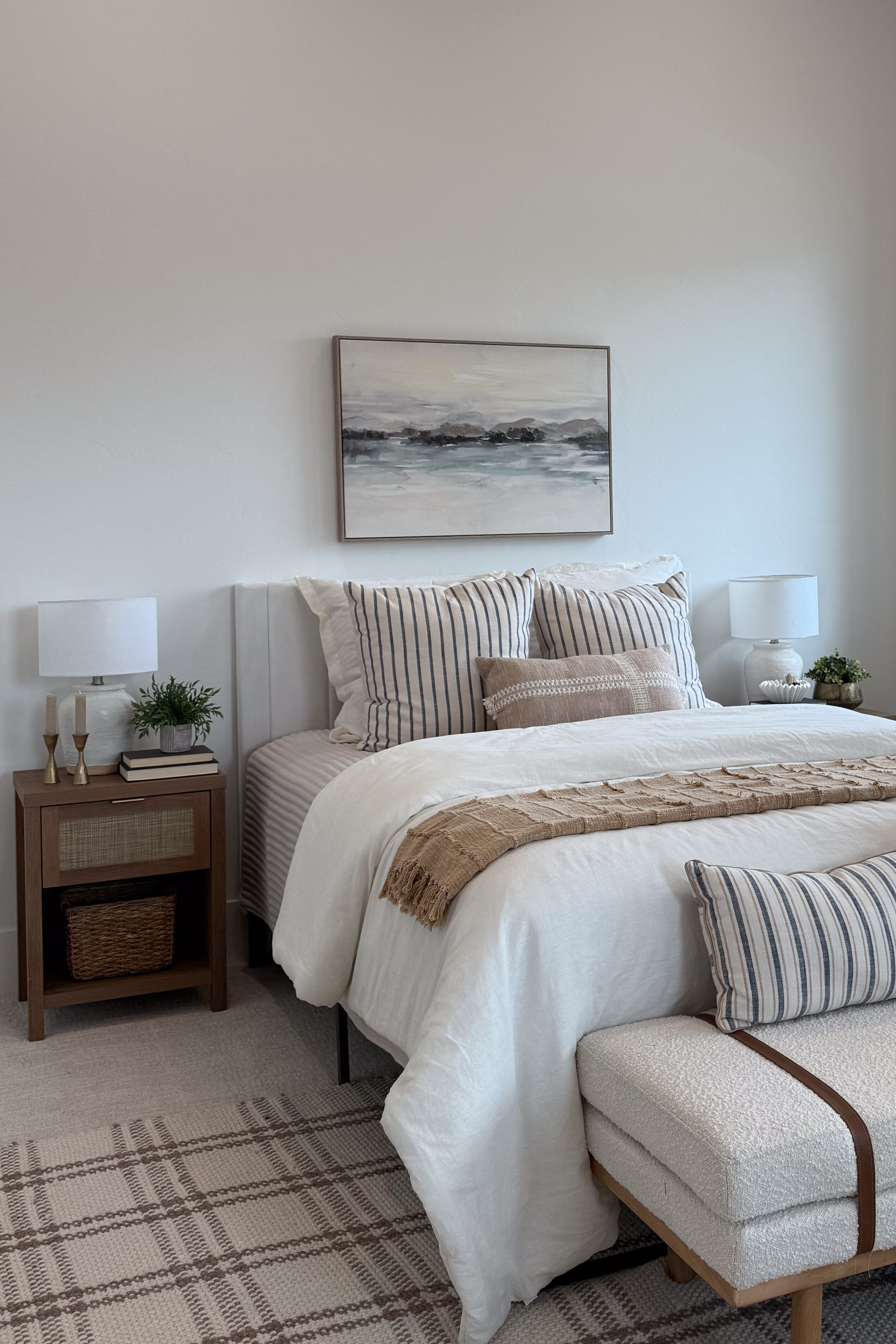
Color is one of the most powerful ways Warm Minimalism creates an inviting and cohesive atmosphere. Unlike traditional Minimalism, which often favors cool grays or stark whites, this approach leans into creamy neutrals, soft greiges, muted taupes, and earthy shades. These warm tones create a sense of calm and openness while adding depth and richness that feels natural and effortless. They allow light to move gently across walls and surfaces, making every corner of a room feel welcoming and alive.
A layered approach brings the palette to life. Walls, trim, furniture, and textiles can all play subtle roles, each with its own variation in warmth or tone. A soft taupe sofa against a creamy wall, a warm wood table, or a linen rug in a muted beige adds dimension without distraction. These subtle contrasts create a feeling of depth and harmony, allowing the eye to rest while noticing small details that bring the room to life.
Warm neutrals do more than just soften a space; they provide a quiet backdrop for the materials and textures that define the room. Wood grain, woven textiles, stone surfaces, and soft fabrics all gain prominence against these tones. The overall effect is a home that feels composed and layered, where simplicity and warmth exist together seamlessly. It is a palette that invites comfort, encourages reflection, and creates a timeless, grounded atmosphere.
Natural Materials as the Focal Point
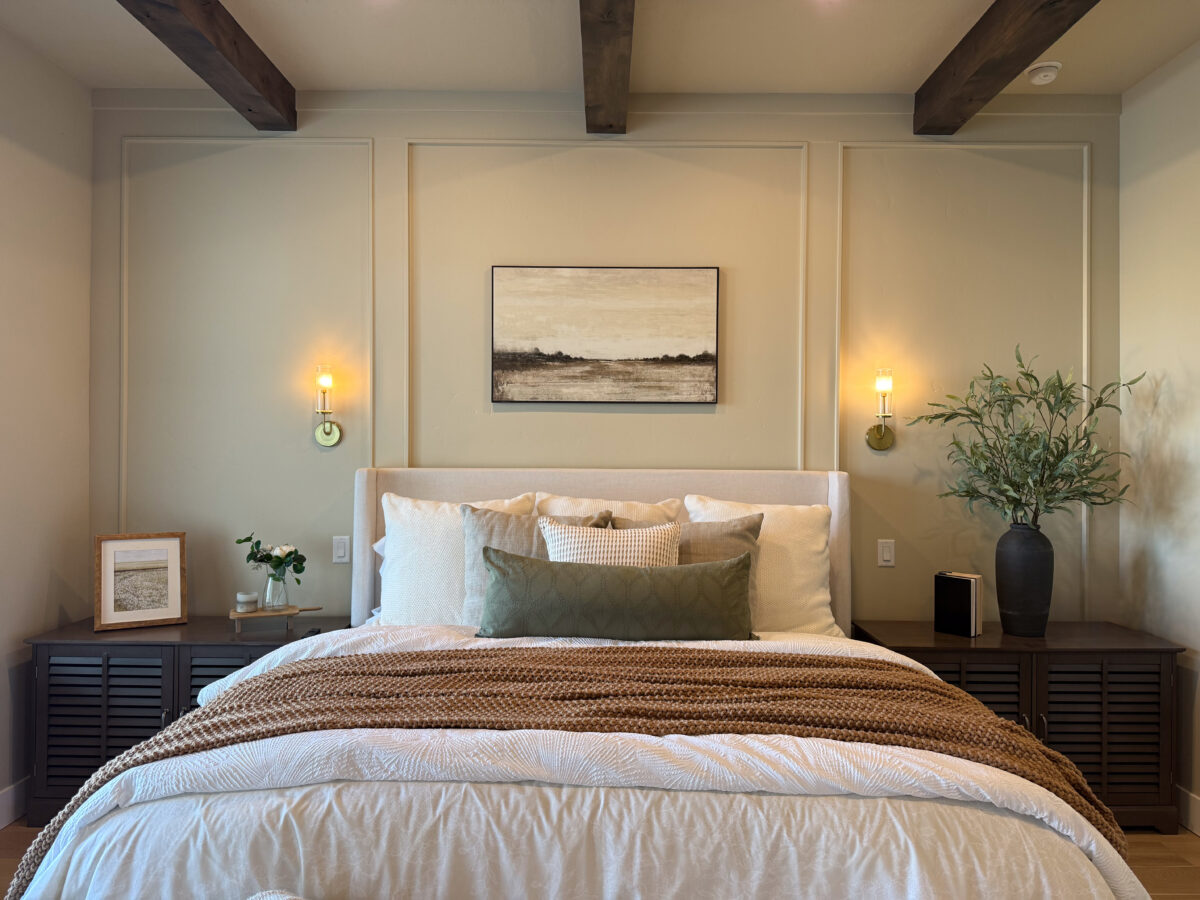
In Warm Minimalism, natural materials are not an accent but the foundation of the design. Rather than relying on ornate decoration, the beauty of the space is revealed through wood grain, stone texture, and the softness of woven fabrics. Light oak flooring, walnut cabinetry, limestone surfaces, and linen upholstery create layers of warmth and authenticity. These elements introduce depth without clutter, allowing the room to feel rich while remaining visually calm. When materials are thoughtfully selected, they bring character and dimension that elevate simplicity into something soulful.
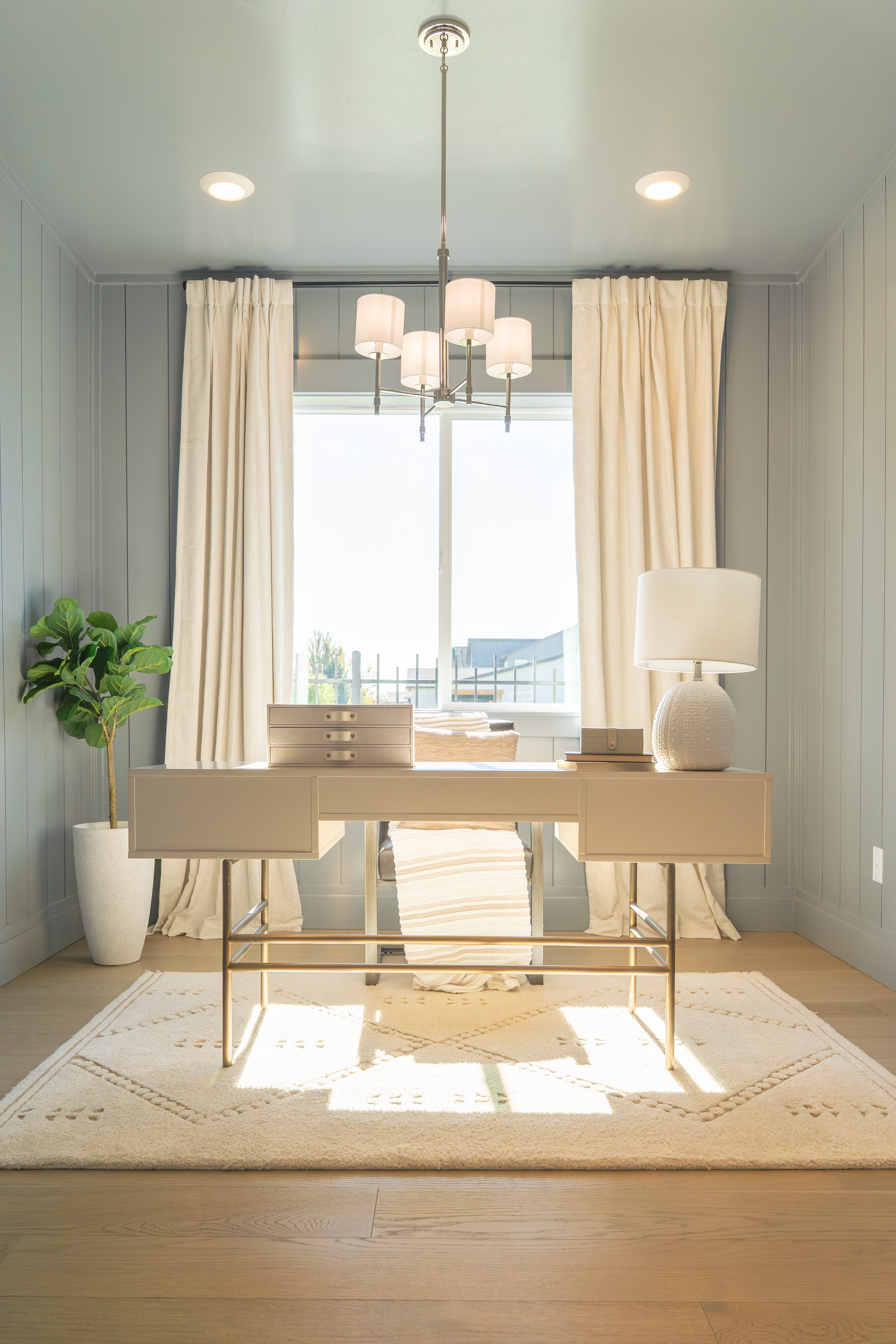
Architectural details further enhance the material story within Warm Minimalism. Instead of ornate trim or heavy profiles, wall treatments such as vertical shiplap or refined board and batten introduce rhythm and subtle structure. These applications create gentle shadow lines that add dimension without overwhelming the simplicity of the space. When finished in warm neutrals or natural wood tones, they become an extension of the material palette rather than a decorative feature. The focus remains on texture, proportion, and craftsmanship, allowing the architecture itself to feel layered, intentional, and quietly impactful.
Texture becomes the bridge between simplicity and comfort. Woven rugs, soft linen drapery, natural fiber accents, and warm wood tones contrast beautifully with smooth plaster walls or stone surfaces. This balance between hard and soft materials creates visual rhythm while preserving the clean lines central to Minimalism. Over time, natural materials develop character, adding quiet depth that enhances the warmth of the home. By allowing materials to speak for themselves, Warm Minimalism achieves a layered, timeless aesthetic that feels both refined and deeply inviting.
Want to explore more accent wall options that will fit your home and mood? Check out Woodgrain’s library for Accent Walls!
Intentional Styling and Negative Space
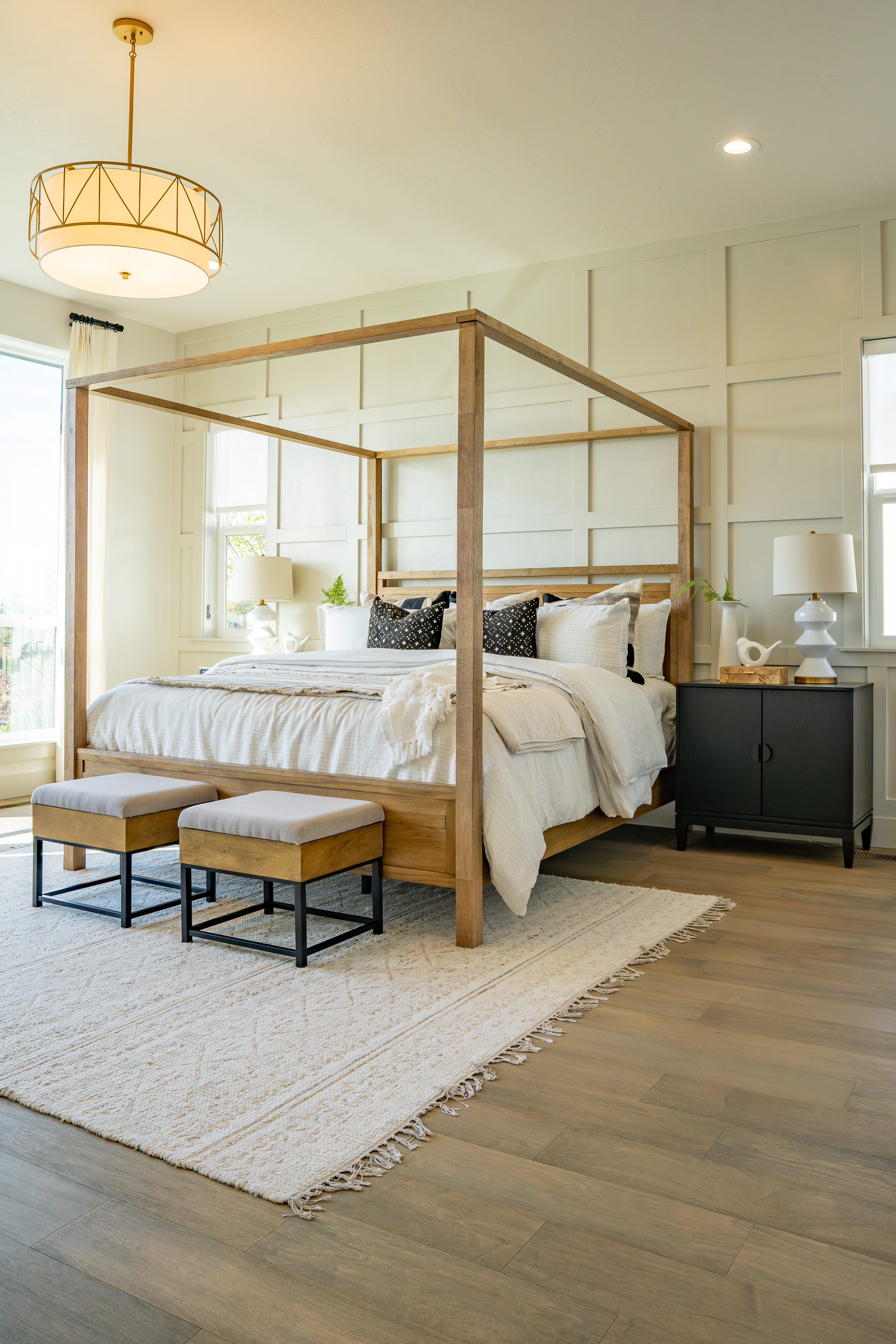
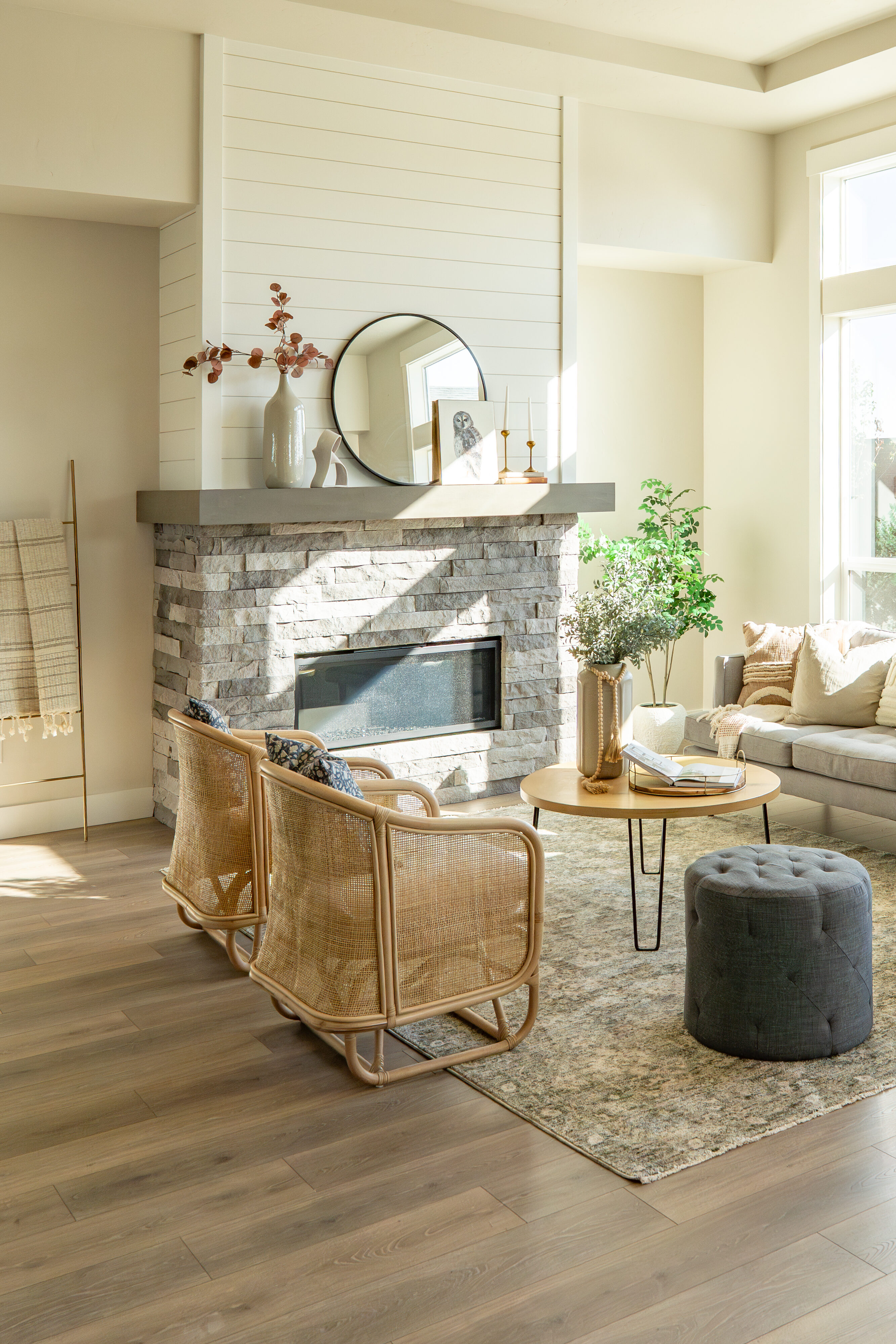
A defining characteristic of Warm Minimalism is restraint. Every item in a room is purposeful, whether functional, decorative, or both. Surfaces are curated, not cluttered, and negative space is embraced as a design element rather than emptiness. This breathing room allows architectural features, materials, and furnishings to take center stage naturally. Statement pieces can carry impact without crowding the space. A sculptural chair, handcrafted bowl, or framed artwork gains prominence when surrounded by calm and open areas. Negative space creates visual rest and serenity while guiding attention to meaningful details. Thoughtful editing reinforces a sense of balance and harmony, allowing rooms to feel composed and inviting. Intentional styling also reinforces warmth. A few carefully chosen accessories, combined with layered textures and subtle tonal variations, create depth without distraction. This approach demonstrates that simplicity does not require sacrifice. It shows how spaces can be both refined and comfortable, supporting calm, everyday living.
Comfort as a Design Element
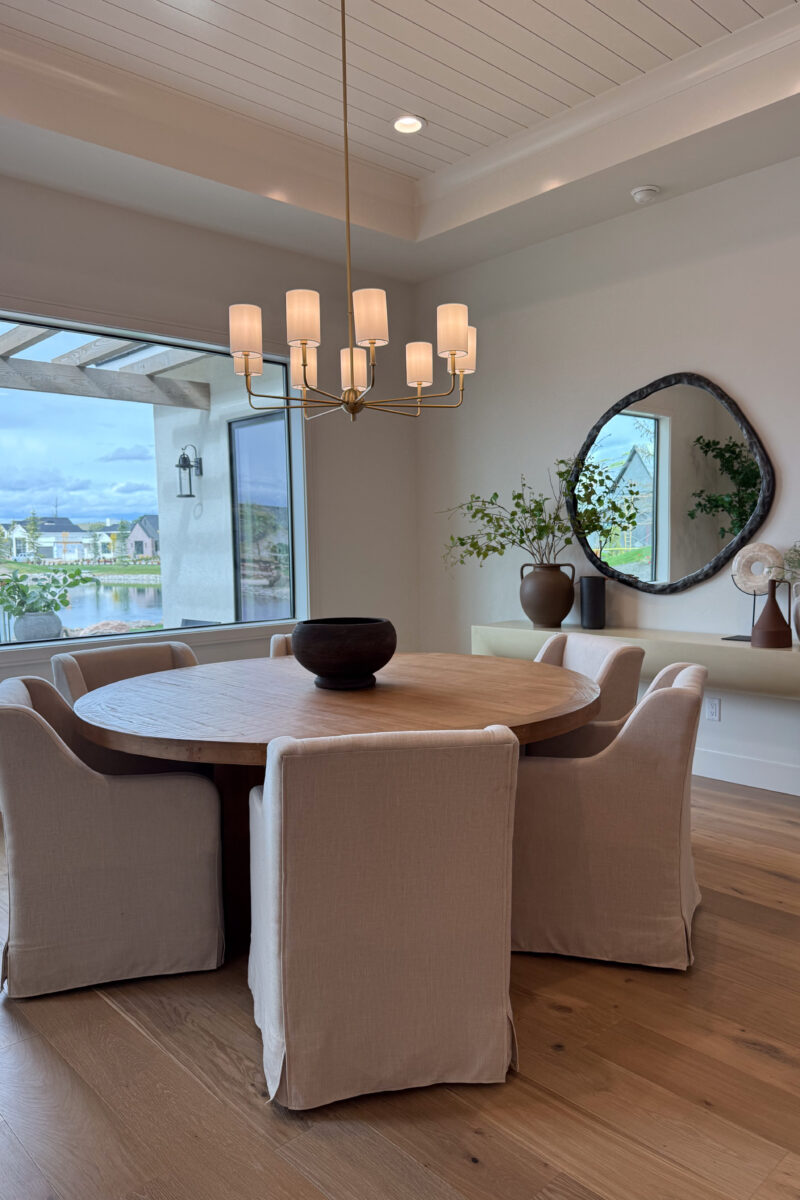
Perhaps what makes Warm Minimalism so appealing is its commitment to comfort. Soft rugs, layered textiles, warm lighting, and natural wood tones create an environment that feels inviting. Furniture with rounded edges, cushioned seating, or tactile fabrics balances clean lines and structured architecture, making spaces feel approachable and lived-in. Comfort is integral to the design, not an afterthought. Beyond materials and furniture, comfort is a feeling that the home fosters. The layout allows for ease of movement, lighting is warm and soft, and textures invite touch. These elements together create an environment where moments of relaxation and reflection feel effortless. The home becomes not only visually calm but emotionally restorative.
Ultimately, Warm Minimalism demonstrates that simplicity and comfort can coexist harmoniously. Thoughtful material choices, subtle architectural details, intentional styling, and tactile finishes combine to create a home that feels grounded, layered, and welcoming. The style shows how a carefully curated space can balance elegance with soul.
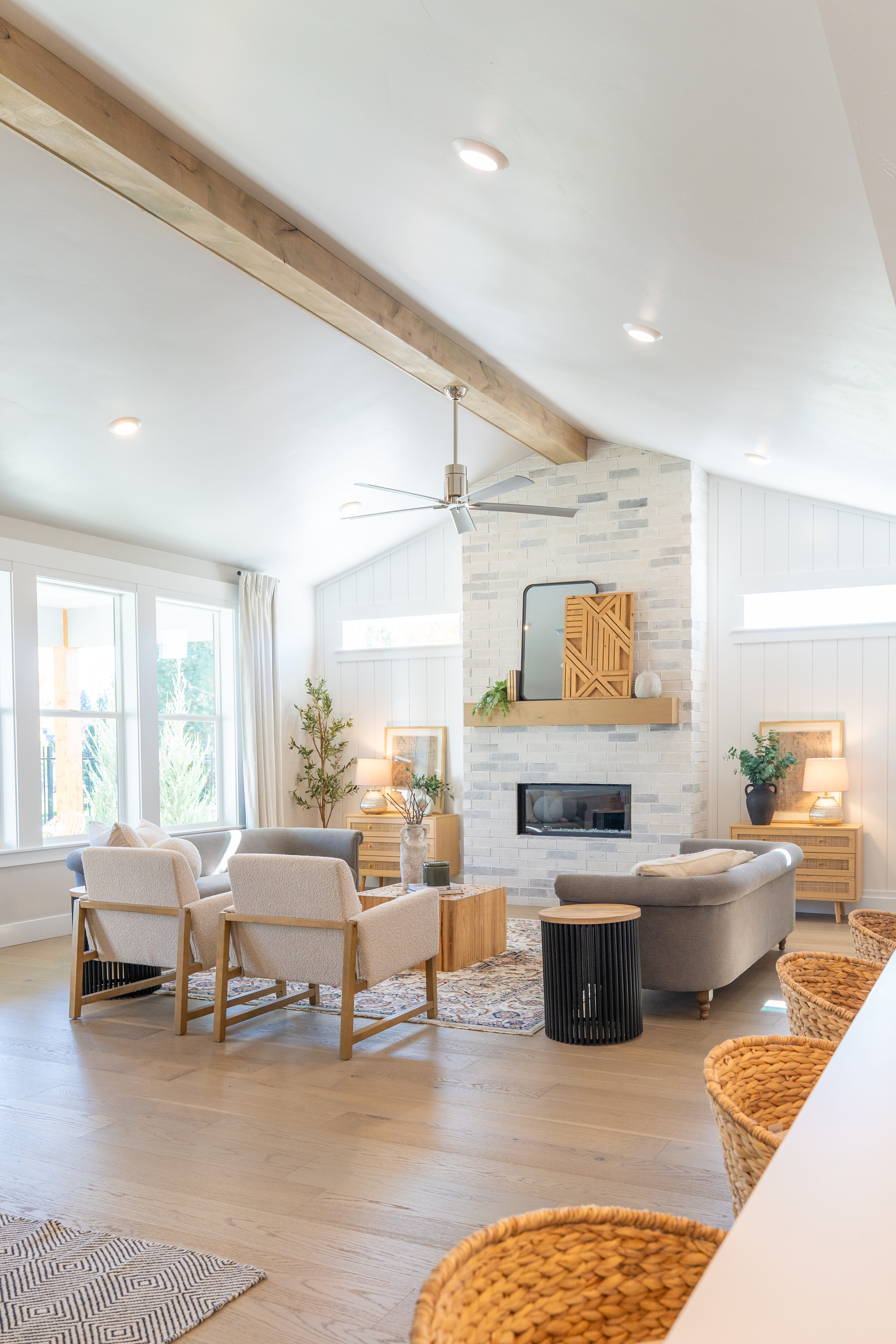
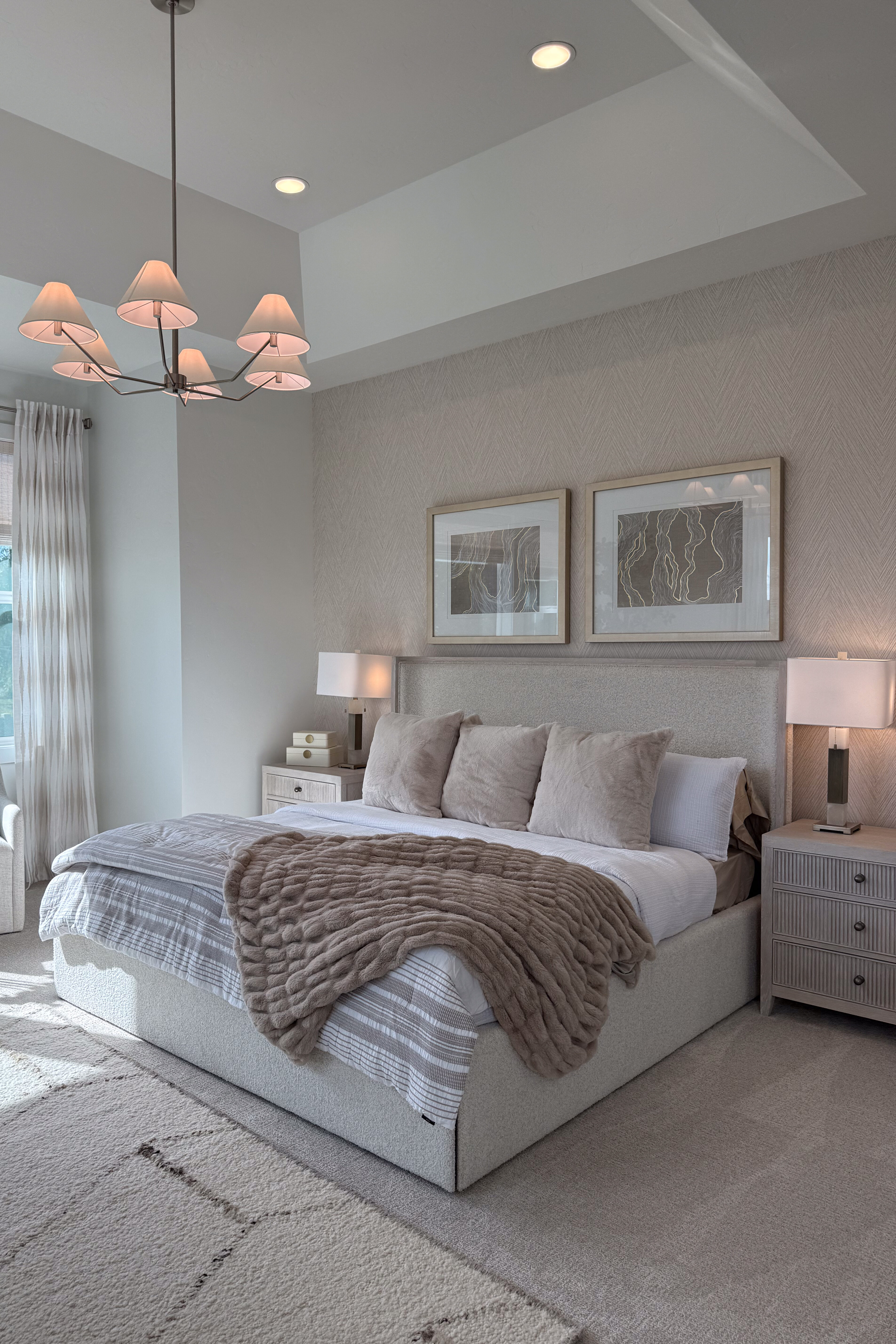
Warm Minimalism redefines simplicity as something inviting, intentional, and deeply livable. By blending clean lines with warm neutral palettes, natural materials, refined architectural details, and thoughtful restraint, this design approach creates spaces that feel cohesive rather than sparse. Negative space allows craftsmanship and texture to shine, while layered lighting and organic forms ensure comfort remains central to the experience. The result is a home that feels calm, grounded, and quietly sophisticated.
In a world filled with visual noise, Warm Minimalism offers a sense of clarity and balance. It proves that simplicity does not mean sacrificing warmth or personality, but rather choosing with purpose. When structure and softness work together, interiors become both refined and restorative.
Could this softer take on Minimalism be the style you would love to bring into your own home? If this style sparks ideas for your home, we would love to see them. Tag us on social media and share how you are incorporating warmth and simplicity into your space.
Check out our Pinterest Board for more inspirational designs and make sure to follow us on all of our social media platforms @WeAreWoodgrain