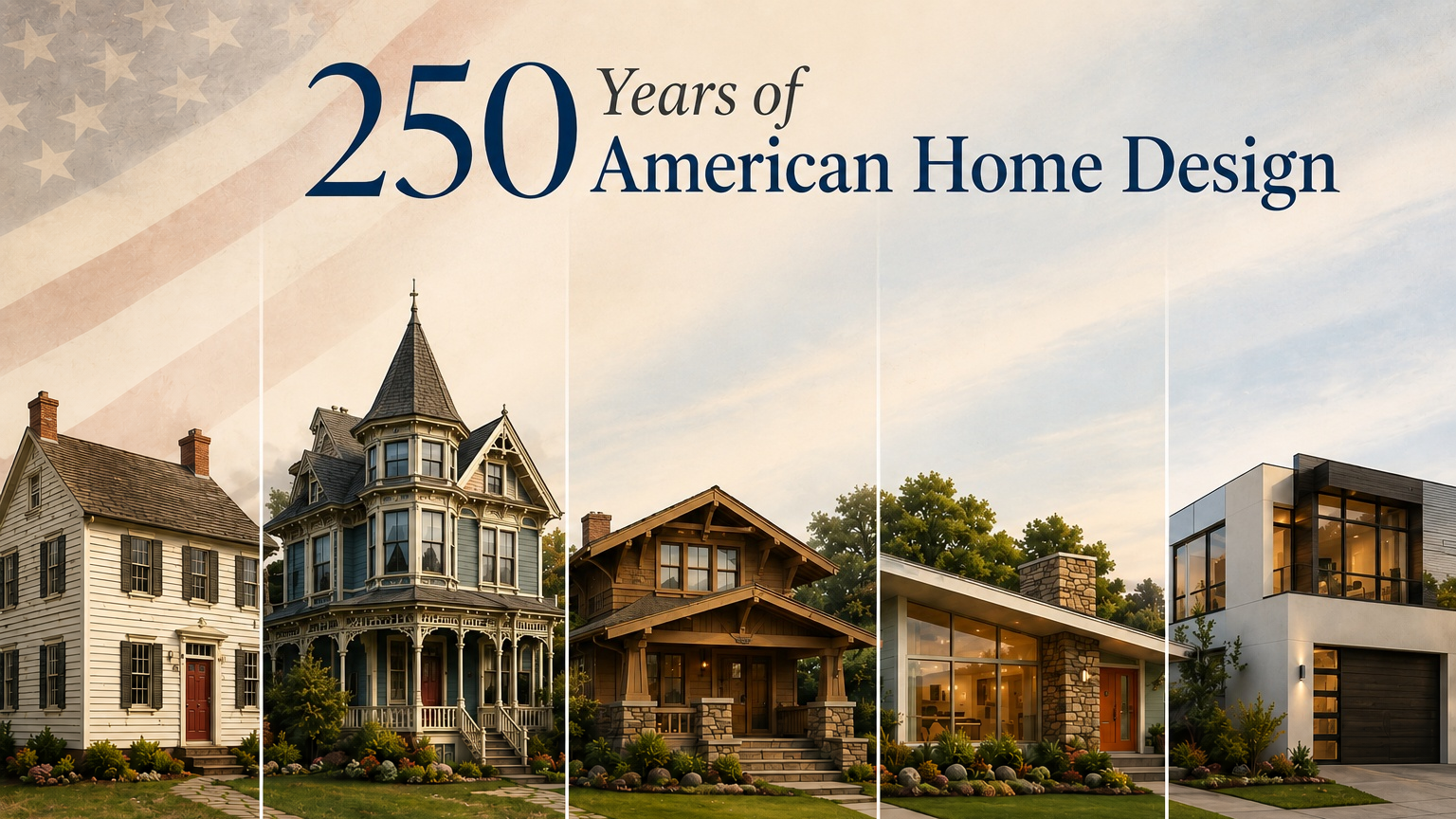
250 Years of American Home Design: Styles That Shaped the Nation
For generations, American homes have reflected more than changing design trends. They have reflected the people who built them, the craftsmanship of their time, and the way families have lived, gathered, and grown together. Every architectural style tells a story, offering a glimpse into the history, values, and creativity that have shaped our nation over the past 250 years.
As the United States celebrates its 250th anniversary, it is the perfect opportunity to look beyond famous landmarks and historic events to appreciate another part of our shared history. From the balanced proportions of Colonial homes to the clean lines of Mid Century Modern design and today’s Modern Heritage approach, American home design has continually evolved while carrying forward ideas that have stood the test of time.
Many of the architectural details we admire today are rooted in these historic styles. Whether it’s a welcoming front porch, beautifully crafted moulding, or a timeless entry door, these elements continue to influence the way homes are designed and built. Looking back at the evolution of American homes helps us better appreciate the craftsmanship and character that have shaped generations of living spaces.
The story of American home design is still being written, but every chapter begins with the homes that came before it. Let’s take a look at the styles that helped shape the nation and continue to inspire the places we call home today.
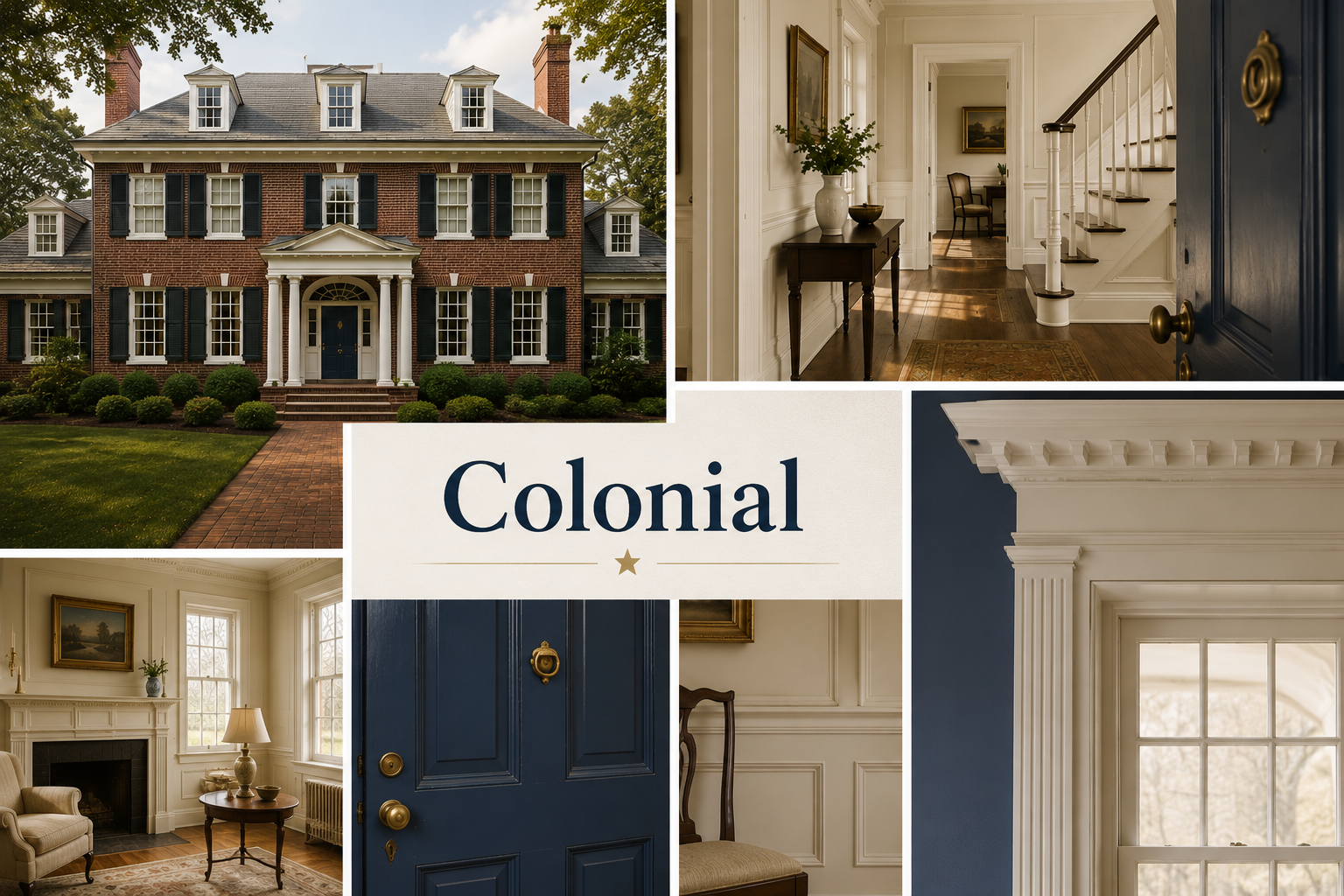
The Front Door of a New Nation: Colonial Foundations
Every great story has a beginning, and for American home design, it started with families looking to build more than just shelter. In the years surrounding America’s founding, homes represented stability, opportunity, and the hope of building a future in a young nation. Drawing heavily from English architectural traditions, Colonial homes emphasized symmetry, proportion, and practicality. They reflected a belief that thoughtful craftsmanship and lasting quality were just as important as appearance.
Approaching a Colonial home, you are greeted by an orderly façade where every element feels carefully considered. A brick or stone walkway leads to a centered front entrance, framed by evenly spaced windows and simple architectural details that create a welcoming first impression. Stepping inside, sunlight spills across wide-plank hardwood floors while raised-panel doors, chair rails, crown moulding, and traditional wood casing quietly define each room. Rather than competing for attention, these details work together to create a home that feels balanced, comfortable, and timeless.
The beauty of Colonial design lies in its restraint. Decorative elements were never excessive because every feature served a purpose. Chair rails protected walls from daily wear, moulding added refinement to ceilings and doorways, and solid wood doors provided durability while showcasing the craftsmanship of local builders. Homes were designed to withstand generations of everyday life, becoming places where families gathered for meals, celebrated milestones, and built traditions that would be passed down for years to come. More than two centuries later, Colonial architecture continues to influence homes across the country. Its emphasis on quality materials, clean proportions, and timeless architectural details has never gone out of style. Whether found in a historic home or incorporated into a newly built residence, these classic design elements remind us that simplicity, when executed with care, can leave a lasting impression.
Bring This Style Home
Love the timeless elegance of Colonial design? Recreate its classic charm with traditional entry doors, crisp moulding profiles, chair rails, and paneled walls that add warmth and architectural character to any home. These simple details continue to create inviting spaces that feel as welcoming today as they did generations ago.
Explore Colonial inspired products → Colonial Classic
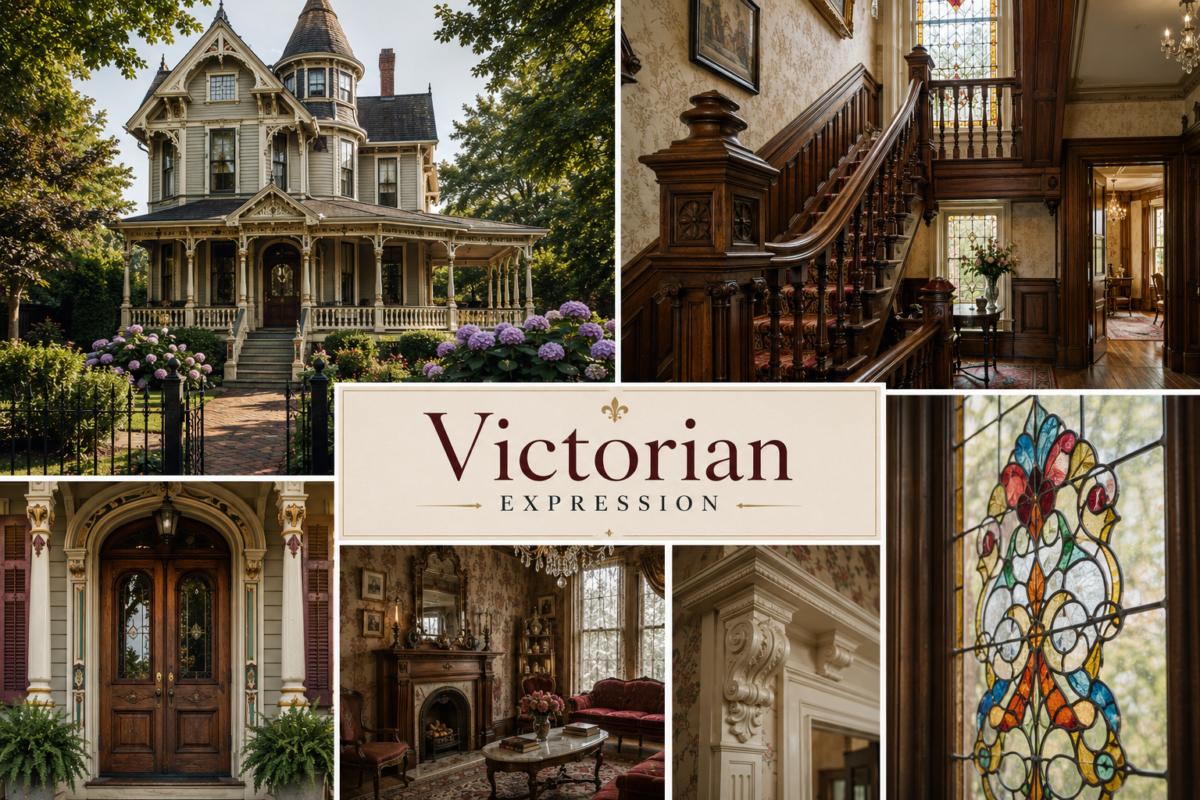
When Homes Became Art: Victorian Expression
As America prospered during the nineteenth century, its homes began to reflect a growing sense of creativity and individuality. Fueled by the Industrial Revolution, advances in manufacturing made decorative architectural elements more affordable and accessible than ever before, allowing homeowners to incorporate intricate details that had once been reserved for grand estates. Home design became an opportunity to express personality, celebrate craftsmanship, and showcase the optimism of a rapidly changing nation. The story of American home design had entered a bold new chapter.
Walking through the front door of a Victorian home was an experience in itself. Richly carved staircases welcomed guests with dramatic elegance while stained glass windows filled hallways with colorful streams of light. Every room offered something new to admire, from decorative crown moulding and ornate door casing to panel mould, decorative ceiling treatments, and beautifully crafted raised panel doors. Rather than fading into the background, architectural details became works of art that transformed ordinary spaces into memorable experiences.
Victorian homes celebrated craftsmanship in every sense of the word. Patterned wallpapers, decorative fireplaces, elaborate trim work, and layered textures reflected an era when beauty was found in thoughtful detail. Families viewed their homes as a reflection of their accomplishments, and every carved spindle, decorative bracket, and carefully designed room told part of that story. Visitors were meant to slow down, admire their surroundings, and appreciate the remarkable artistry found throughout the home.
While modern interiors often emphasize cleaner lines and simpler color palettes, the influence of Victorian design remains surprisingly relevant. Elements such as decorative moldings, striking staircases, intricate entryways, and ornate wall treatments continue to inspire homeowners seeking to infuse personality and character into their spaces. Victorian design reminds us that a home can be both practical and expressive, reflecting the timeless beauty that skilled craftsmanship can bring to any environment.
Bring This Style Home
Love the artistry of Victorian homes? Add character with decorative moulding, ornate door casings, statement staircases, and beautifully detailed entry doors that celebrate craftsmanship while creating unforgettable first impressions.
Explore Victorian inspired products → Victorian Elegance
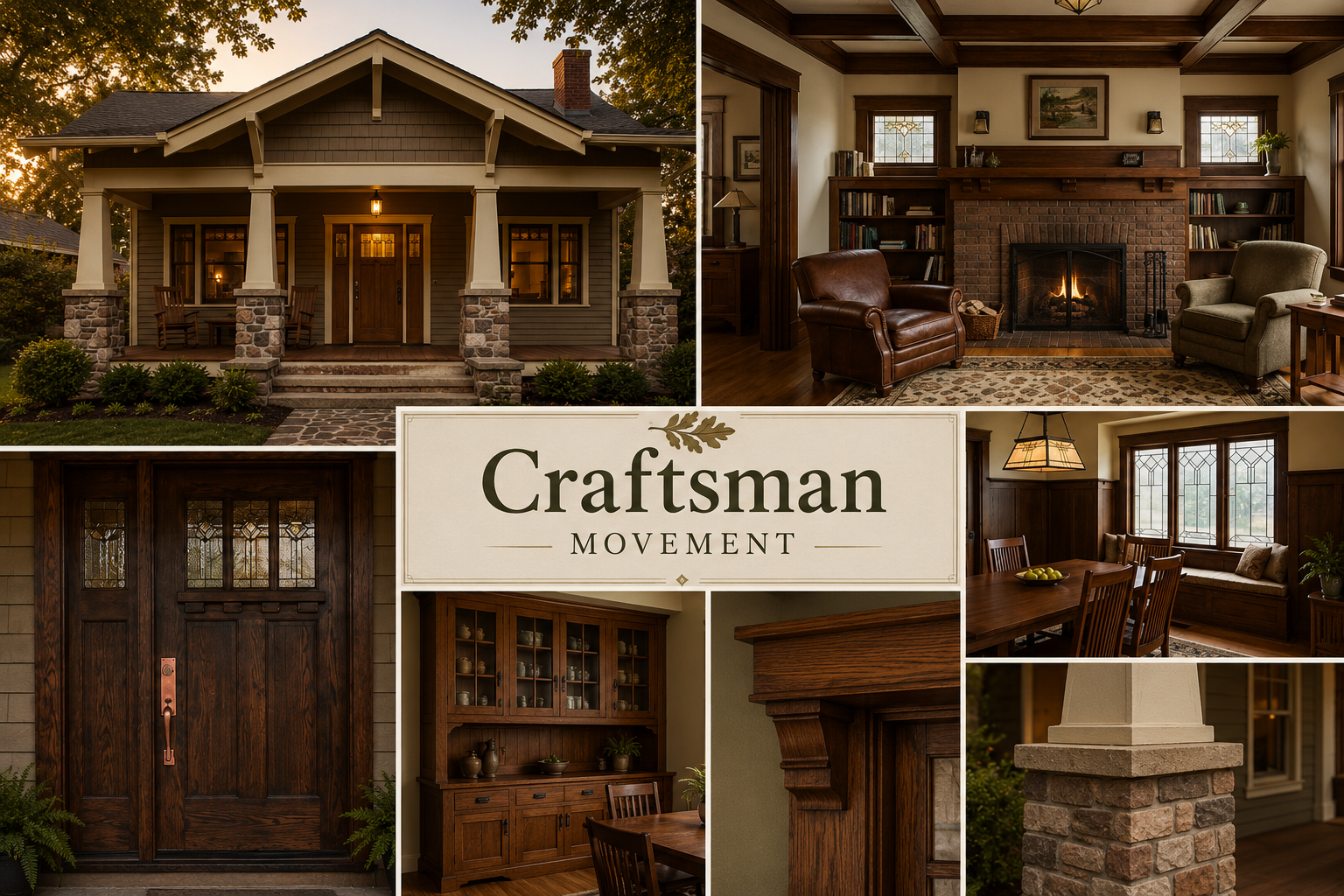
A Return to Handcrafted Living: The Craftsman Movement
As the twentieth century unfolded, America was once again in the midst of change. With factories producing a growing array of mass-manufactured goods, homeowners and designers started to crave something different, a home that embraced the beauty of handcrafted quality and natural materials. This desire for authenticity and comfort, along with a stronger connection to the natural world, gave rise to the Craftsman movement and fostered a renewed appreciation for artisanal design.
Arriving at a Craftsman home, you’re immediately drawn to its inviting front porch, where sturdy tapered columns rest on stone bases and wide overhanging eaves create a sense of shelter. Stepping inside, the warmth of natural wood surrounds you. Craftsman-style entry doors, Shaker interior doors, wide flat stock casing, and exposed beams work together to create spaces that feel honest, welcoming, and thoughtfully built. Every architectural detail celebrates the beauty of the material itself rather than hiding it behind elaborate ornamentation.
Unlike the Victorian era, where decoration often became the focal point, Craftsman homes found beauty in simplicity and purpose. Built-in bookcases, window seats, and cabinetry served both practical and decorative roles. The philosophy was simple: when something is made well, it does not need unnecessary embellishment. This approach celebrated the skill of the craftsperson and the natural character of wood, stone, and other honest materials.
More than a century later, the Craftsman movement continues to resonate with homeowners who appreciate warmth, authenticity, and timeless craftsmanship. Its influence can be seen in everything from welcoming front porches to beautifully crafted millwork that adds character without overwhelming a space. It reminds us that thoughtful design is often found in the smallest details, and that a home built with care will always feel inviting.
Bring This Style Home
Capture the warmth of Craftsman design with natural wood entry doors, substantial moulding, built-in details, and timeless trim profiles that celebrate quality craftsmanship while creating comfortable, welcoming spaces.
Explore Craftsman inspired products → Timeless Craftsman
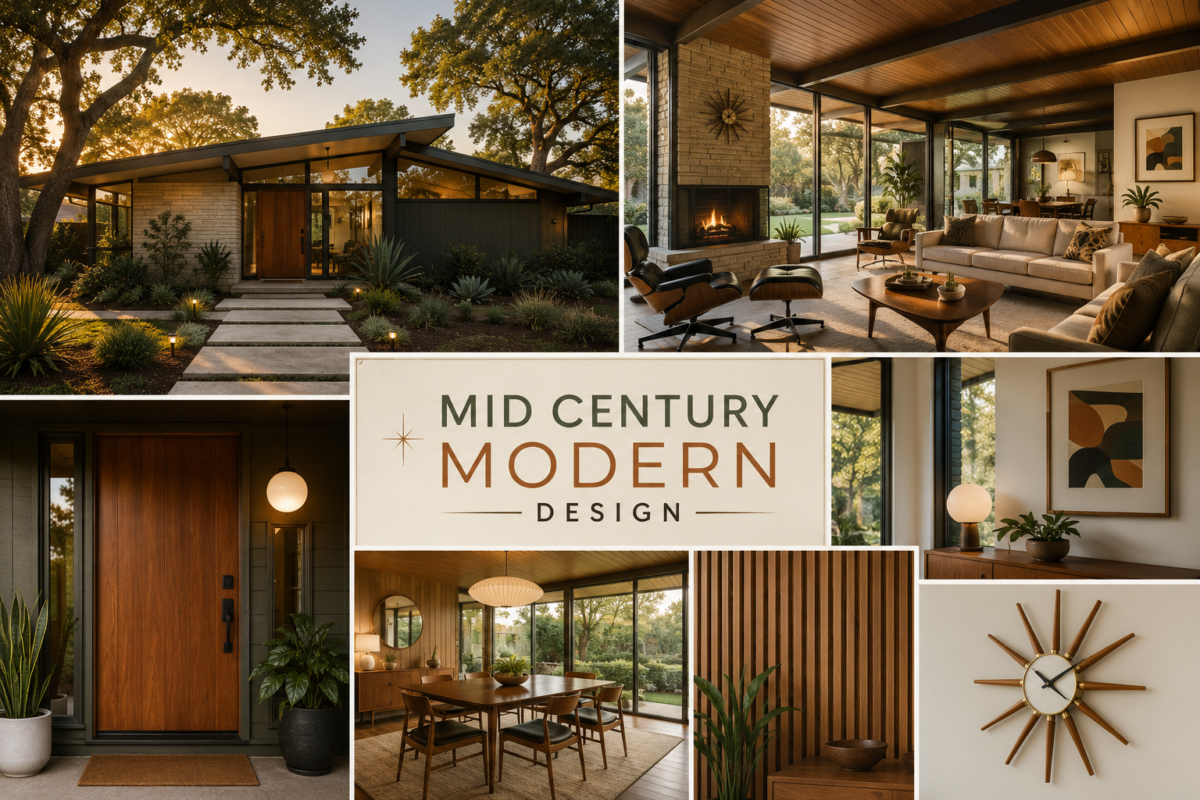
Reimagining the Way We Live: Mid-Century Modern Design
Following World War II, America entered a new era of optimism and innovation. Families were growing, suburbs were expanding, and architects began rethinking what a home could be. Instead of dividing life into separate formal rooms, homes became brighter, more open, and designed around the way families actually lived. The result was Mid-Century Modern design, a style that continues to influence architecture around the world.
Walking into a Mid-Century Modern home feels refreshingly different. Expansive windows immediately draw your attention to the landscape beyond, while open living spaces encourage conversation and connection. Flush interior doors, large glass entry doors, minimal molding profiles, and clean architectural lines allow natural light, beautiful materials, and thoughtful proportions to take center stage in the home. Rather than relying on decorative details, these spaces find beauty in openness, balance, and simplicity.
This shift reflected more than changing design preferences. It represented a new way of living. Families gathered in shared spaces instead of formal parlors, kitchens became more connected to the rest of the home, and outdoor living became a natural extension of the interior. Architects embraced new building materials and technologies that allowed homes to feel lighter, brighter, and more adaptable to everyday life.
Today, Mid-Century Modern remains one of the most influential design movements in American architecture. Its emphasis on natural light, functional layouts, and understated elegance continues to inspire homeowners who appreciate clean design with lasting appeal. More than seventy years later, it proves that simplicity, when thoughtfully executed, never goes out of style.
Bring This Style Home
Bring Mid-Century Modern style into your home with sleek entry doors, clean lined moulding, expansive glass, and warm wood finishes that create bright, inviting spaces with timeless appeal.
Explore decorative inspirations for Mid-Century Modern Interior → Forever A Classic: How to Decorate Mid-Century Modern
Where Past and Present Meet: Modern Heritage
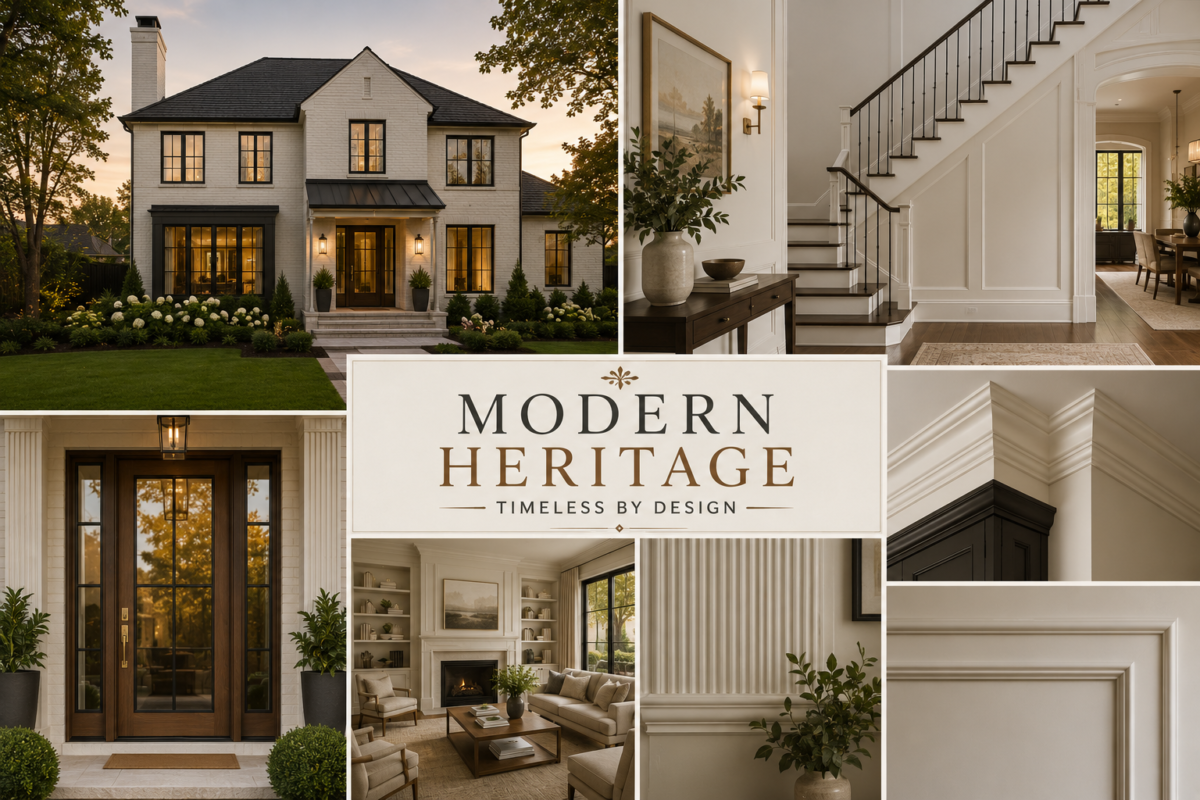
Today’s homes tell a story unlike any generation before them. Rather than following a single architectural style, homeowners have the freedom to draw inspiration from every era that came before. This thoughtful blend of old and new has inspired what many designers refer to as Modern Heritage, a design approach that celebrates history while embracing the comforts and lifestyles of today.
Step inside a Modern Heritage home and you’ll quickly recognize familiar architectural details presented in fresh, contemporary ways. Fluted moulding, picture frame moulding, wall paneling, elegantly designed entry doors, and thoughtfully crafted trim add warmth and character to spaces that feel both timeless and contemporary. Rather than recreating the past, these details reinterpret it, allowing homeowners to celebrate classic craftsmanship while embracing today’s clean, livable aesthetic.
Perhaps what makes Modern Heritage so appealing is that it allows every homeowner to tell a personal story. Some may incorporate the symmetry of Colonial architecture, while others are drawn to the rich details of Victorian design or the warmth of Craftsman craftsmanship. Mid-Century openness and modern functionality blend effortlessly with these timeless influences, resulting in homes that feel collected rather than copied. Every design choice reflects both the past and the people who live there today.
In many ways, Modern Heritage is less about choosing one architectural style and more about celebrating the best qualities of them all. The balance of Colonial homes, the artistry of Victorian craftsmanship, the warmth of Craftsman design, and the openness of Mid-Century Modern living all continue to inspire today’s interiors. Rather than recreating history, homeowners are thoughtfully blending these timeless ideas to create spaces that feel personal, welcoming, and uniquely their own. It is a fitting reminder that great design does not belong to one era. Instead, it evolves with every generation while honoring the craftsmanship that came before. In many ways, Modern Heritage brings our journey full circle. It reminds us that great design is never about recreating history exactly as it was. Instead, it is about understanding what made these styles meaningful and thoughtfully carrying those ideas into the future. The result is a home that feels familiar, welcoming, and uniquely personal.
Bring This Style Home
Create a home that feels both timeless and current by combining classic moulding profiles, fluted details, paneled walls, and statement entry doors with today’s clean architectural lines and warm natural finishes.
Explore decorative inspirations for Modern Heritage → Modern Heritage: The Interior Design Style Blending Past and Present
Over the past 250 years, American home design has evolved alongside the people who live within it. Each era has contributed something meaningful, from Colonial balance and Victorian detail to Craftsman warmth and Mid-Century openness. These influences continue to shape how homes are built, designed, and experienced today. The story of American home design is one of constant adaptation and creativity.
While architecture has continually evolved, one thing has remained unchanged: our desire to create homes that feel meaningful and personal. Styles may shift over time, but an appreciation for craftsmanship, comfort, and thoughtful design continues to guide the way we build. These values connect every generation of American home design and remind us that our homes are much more than structures. They are places where memories are made, traditions are shared, and stories continue to unfold.
As we celebrate this milestone in American history, it becomes clear that home design is about far more than trends or time periods; it reflects the people, traditions, and craftsmanship that have helped shape our nation for 250 years. If the walls of America’s homes could talk, they would tell stories of generations who built, gathered, celebrated, and created places to belong. The next chapter of American home design is still being written, and it will be inspired by the same creativity, craftsmanship, and enduring sense of home that have guided the last 250 years.
Which architectural style speaks to you the most? Whether you love the timeless balance of Colonial homes or the clean simplicity of Mid-Century Modern design, we’d love to hear which era inspires your home the most. Share your favorite style with us on social media!
Check out our Pinterest Board for more inspirational designs and make sure to follow us on all of our social media platforms @WeAreWoodgrain