
Coastal Interior Design: Bringing Relaxed Seaside Style Home
There is something undeniably inviting about a home that feels bright, relaxed, and effortlessly connected to its surroundings. The spaces many people gravitate toward are often not the most elaborate or heavily decorated. Instead, they are the ones that feel open, comfortable, and naturally welcoming from the moment you step inside.
Coastal interior design embraces many of these qualities. Inspired by the colors, textures, and atmosphere of shoreline living, the style has long been associated with creating spaces that feel calm, approachable, and timeless. While its origins can be traced to seaside cottages and waterfront retreats, today’s interpretation extends far beyond homes near the coast.
As homeowners continue seeking interiors that feel both beautiful and livable, coastal design has evolved into a versatile style that balances natural materials, thoughtful millwork details, and a strong connection to light and space. From moulding and trim to accent walls, doors, and architectural features, coastal-inspired elements offer countless opportunities to bring warmth, character, and lasting appeal into the home.
The Evolution of Coastal Design
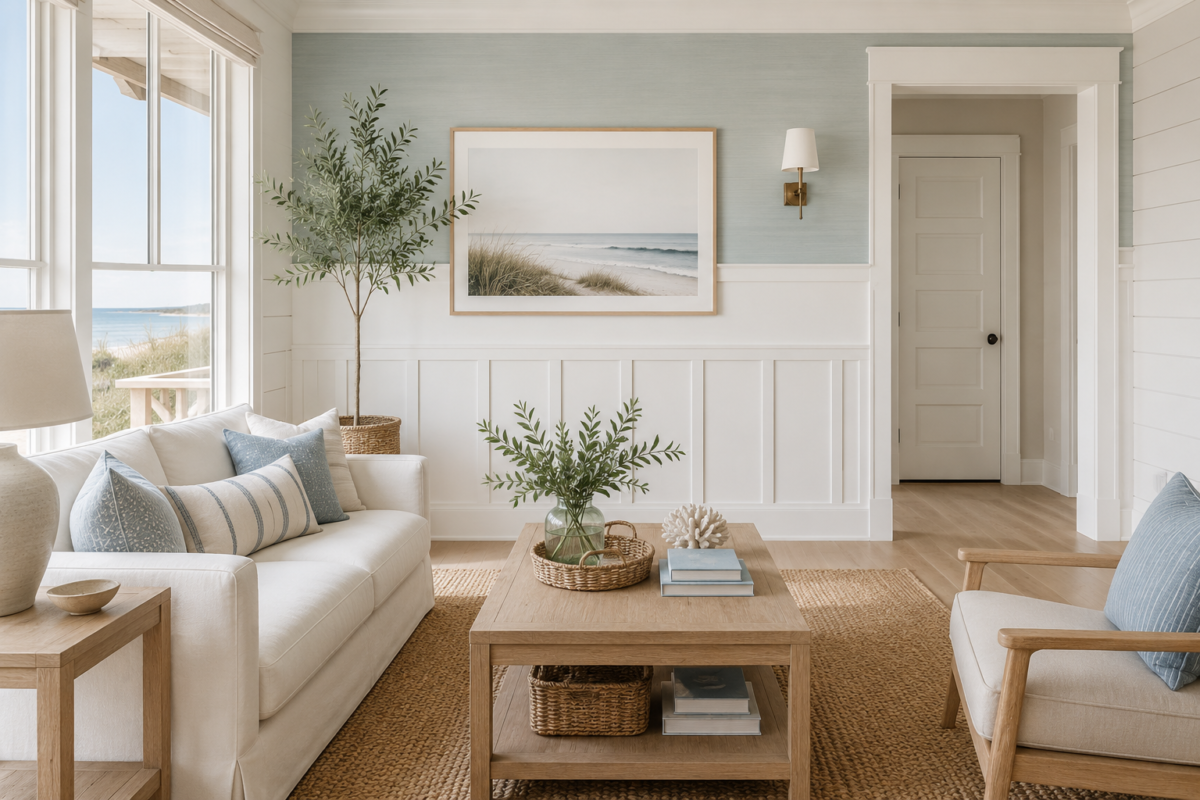
Like many enduring design styles, coastal interior design began with practicality. Early coastal homes were designed to work with their surroundings, welcoming natural light, encouraging airflow, and creating comfortable spaces that could withstand changing weather conditions. Large windows, simple furnishings, and durable materials were often chosen out of necessity, but over time these functional features became defining elements of the style itself.
As coastal communities grew and vacation homes became more popular, the aesthetic began to spread beyond beachfront properties. Designers and homeowners were drawn to the relaxed atmosphere these homes created and started adapting those principles to homes in a variety of locations. What began as a regional design approach gradually evolved into a widely recognized interior style.
Today’s coastal interiors differ significantly from the nautical-themed spaces that were once popular. Rather than relying on anchors, seashell collections, and overt beach references, modern coastal design focuses on capturing the feeling of shoreline living. The emphasis has shifted toward creating spaces that feel open, comfortable, and connected to nature through thoughtful design choices and timeless details.
Coastal Style Today
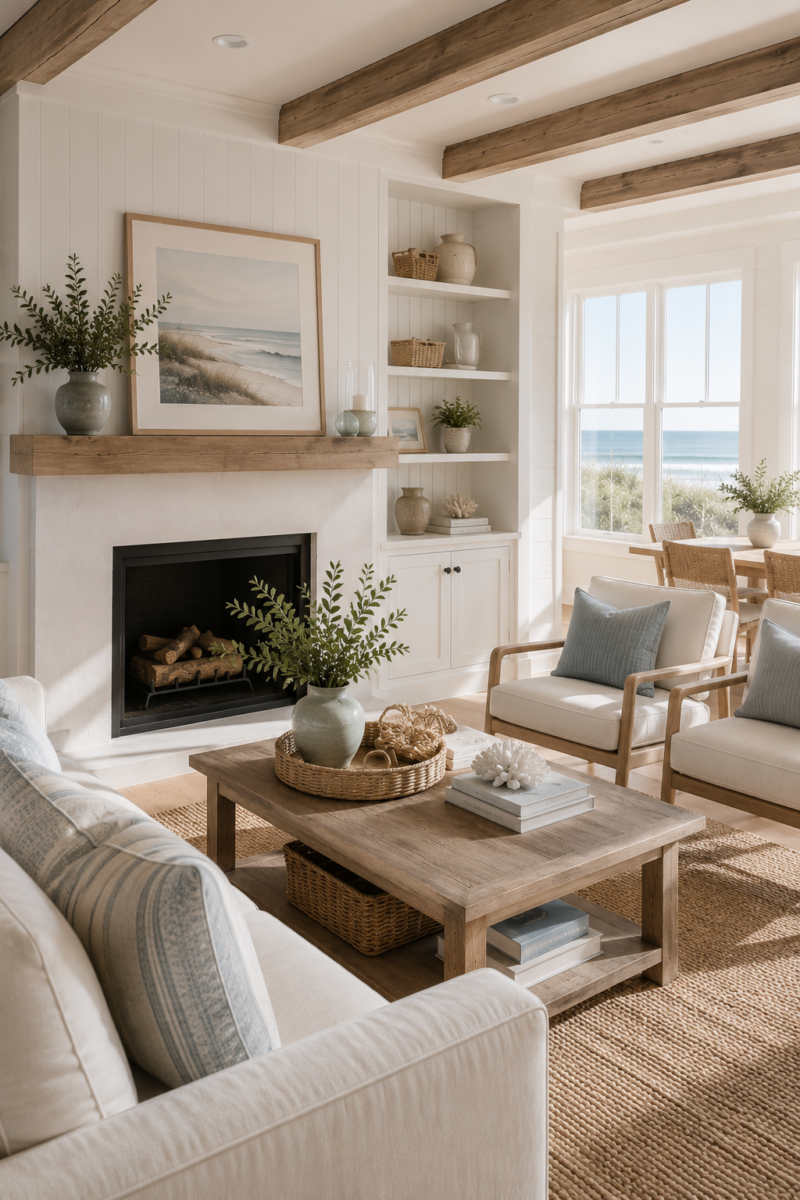
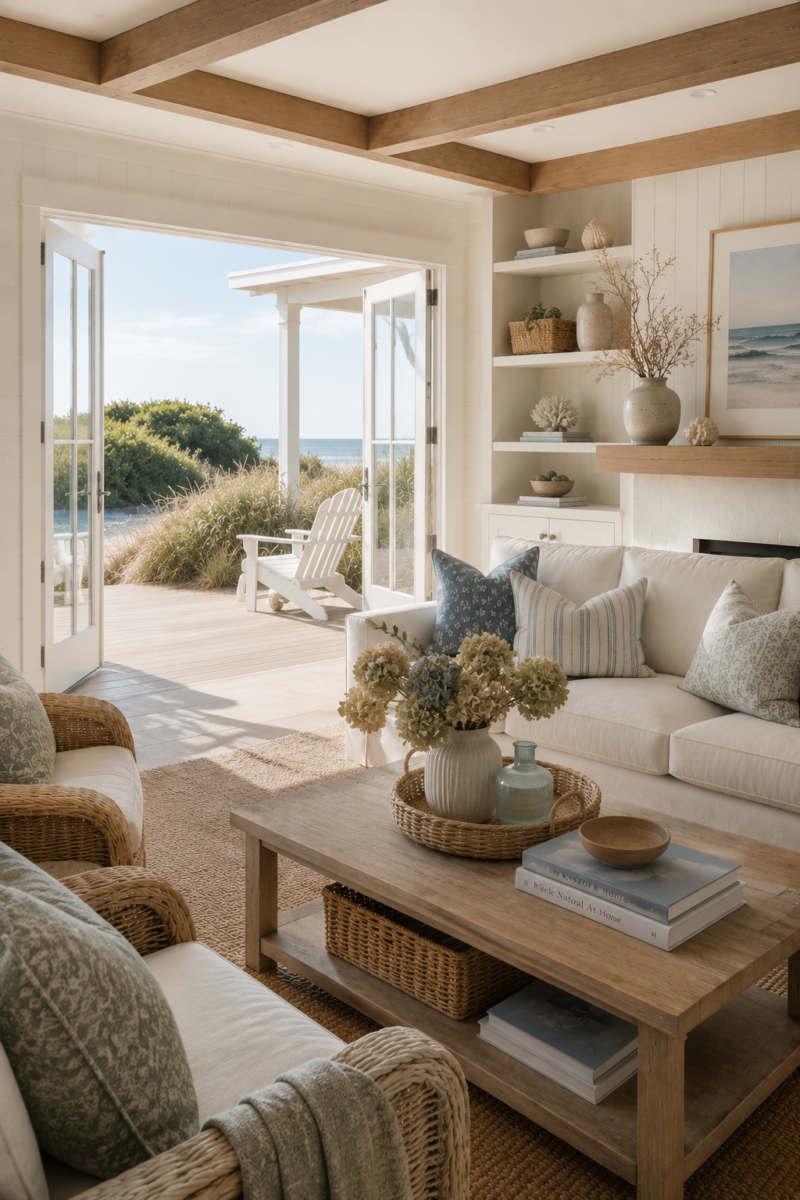
At its core, coastal design is about creating spaces that feel calm, welcoming, and effortlessly livable. While the style continues to evolve, several characteristics remain central to its appeal. Color plays an important role in establishing the coastal aesthetic. Soft whites, warm creams, sandy beiges, muted blues, and subtle greens are often used to reflect the natural tones found along the shoreline. These lighter palettes help create a sense of openness while allowing natural light to become a feature within the space itself. Natural light serves as one of the most important design elements in coastal interiors. Rather than competing with available light through dark finishes or heavy décor, coastal spaces are designed to enhance it. Large windows, reflective surfaces, lighter wall colors, and thoughtfully selected trim details all help create bright environments that feel welcoming throughout the day. Whether incorporated through wall color, furnishings, cabinetry, or trim finish, these hues help establish the relaxed atmosphere that coastal interiors are known for.
Texture is equally important. Without thoughtful layering, light interiors can sometimes feel flat or sterile. Coastal spaces often balance lighter colors with natural materials such as wood, linen, woven fibers, stone, and textured fabrics. White oak furniture, woven lighting, natural fiber rugs, and soft linen textiles are common examples that help create warmth and depth while maintaining the casual elegance that defines the style.
Modern coastal design also embraces a balance between simplicity and character. While clean lines and uncluttered spaces remain important, homeowners are increasingly incorporating millwork, accent walls, and architectural details to add depth and visual interest. Board and batten walls, beadboard applications, shiplap, and thoughtfully selected doors allow homeowners to introduce texture and personality while preserving the light, airy quality that makes coastal design so appealing.
Perhaps one of the reasons coastal design continues to resonate with homeowners is its versatility. Whether incorporated into a traditional home, a modern residence, or a cozy cottage, the style can be adapted to reflect a variety of personal tastes while maintaining its signature sense of comfort and ease.
While color, texture, and natural materials help establish the foundation of coastal design, it is often the architectural details that bring the style to life and give a home its lasting character.

Architectural Details
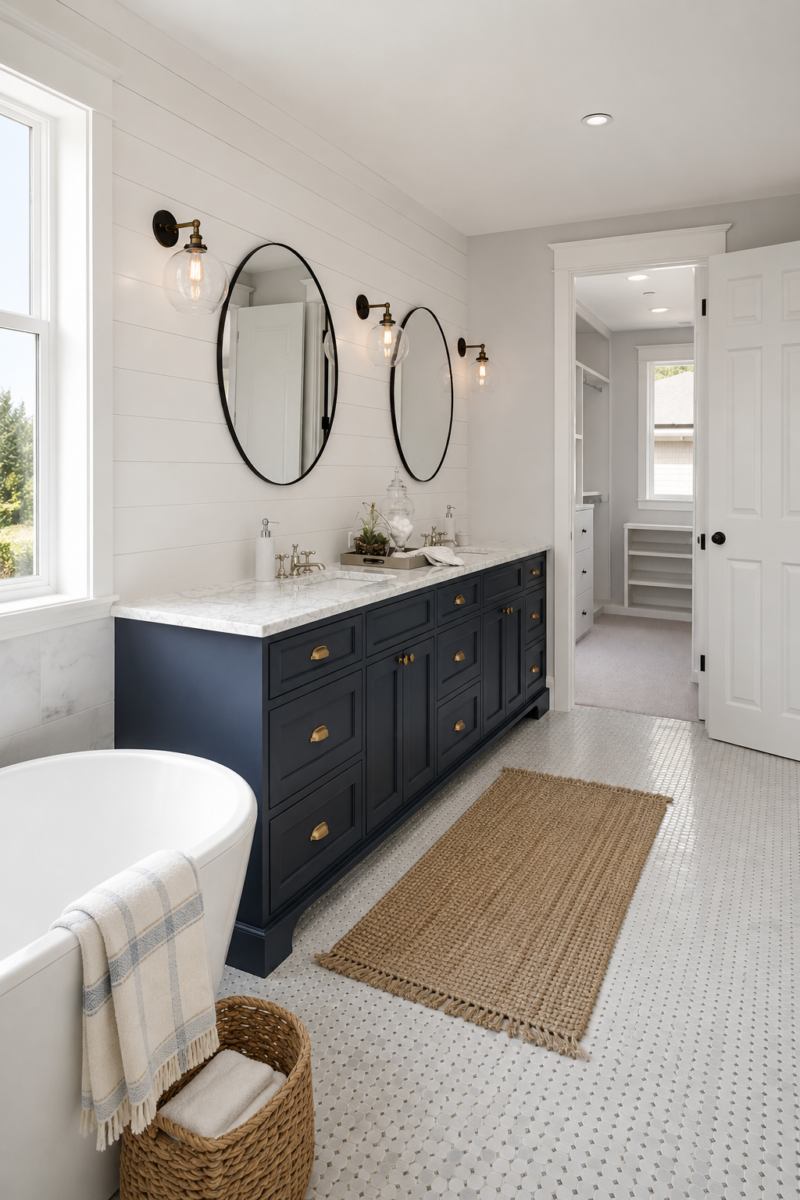
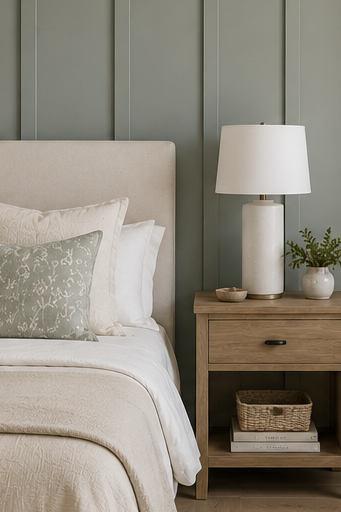
One of the reasons coastal interiors feel so timeless is that they often rely on architectural details rather than trends. While color palettes and furnishings help establish the mood, moulding, trim, and wall treatments are often what create the depth and character that make a space feel complete. Accent walls have become a popular way to introduce coastal-inspired texture and dimension without overwhelming a room. Unlike bold paint colors or heavily patterned wallpaper, moulding and paneling treatments add visual interest while maintaining the light and airy feel that coastal design is known for.
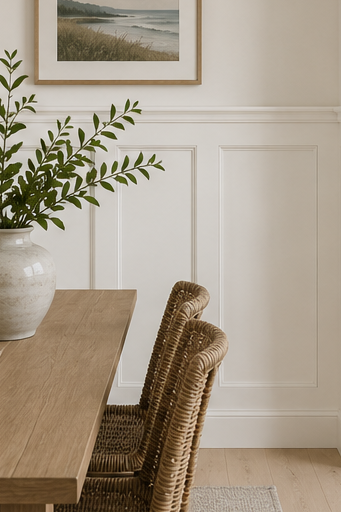
For homeowners drawn to classic cottage-inspired coastal spaces, wainscoting remains a timeless choice. Commonly used in dining rooms, entryways, bathrooms, and mudrooms, wainscoting introduces texture while helping create the welcoming charm often associated with seaside homes. A panel mould such as the 4275 profile can be used to create elegant wall panel layouts, while a cap mould like the 1207 profile provides a finished transition that adds subtle architectural refinement. Together, these details help create walls that feel thoughtfully designed without becoming overly formal.
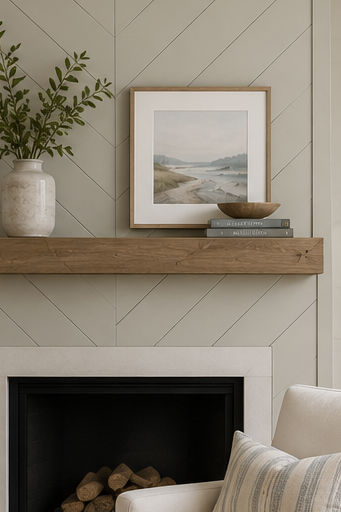
Those looking for a more modern interpretation of coastal design may gravitate toward board and batten accent walls. Their structured appearance adds depth and architectural interest while maintaining the simplicity that defines many coastal interiors. Flat stock materials and simple trim profiles create crisp shadow lines that pair beautifully with the clean aesthetic often found in modern coastal homes. Shiplap also continues to be one of the most recognizable wall treatments within coastal design. Whether installed in a bedroom, hallway, living room, or around a fireplace, 1×4 or 1×6 shiplap introduces texture and visual movement while maintaining the relaxed character associated with shoreline living. When paired with substantial window casing and wider baseboards, shiplap can help create the timeless architectural appeal often found in coastal cottages and New England-inspired homes.
For homeowners looking to create a more contemporary coastal statement, geometric accent walls such as chevron patterns offer an opportunity to introduce movement and dimension. Using a profile such as the 254 Stop alongside 1×4 S4S boards allows the pattern itself to become the focal point while maintaining the clean simplicity that coastal design is known for. A substantial base profile such as the 623 Base can then help ground the installation and create a polished finish.
Beyond accent walls, decorative moulding details can introduce subtle references to traditional coastal craftsmanship. Profiles such as the D-R-375STR add gentle curved detailing that feels inspired by rope and nautical influences without appearing overly themed. Similarly, the D-ROPE4 profile can be incorporated as an accent within built-ins, feature walls, cabinetry, or trim applications to introduce texture and visual interest. For homeowners seeking a softer decorative touch, the D-PB-375-M profile offers a refined profile that complements both traditional and transitional coastal interiors.
One of the defining characteristics of successful coastal design is layering texture in a way that feels natural and effortless. By combining accent walls, moulding details, trim profiles, and architectural features throughout the home, it becomes possible to create spaces that feel bright, welcoming, and connected to the relaxed spirit of coastal living.
Doors That Complete the Look
Just as accent walls, moulding, and trim help establish coastal character, interior doors contribute another layer of architectural detail that can shape the overall feel of a home. While often viewed as a functional necessity, doors can reinforce a design style, add visual interest, and help create continuity from room to room. One of the defining characteristics of coastal interiors is their balance between simplicity and character. The door styles selected throughout a home can help support this balance while adding another layer of thoughtful design.
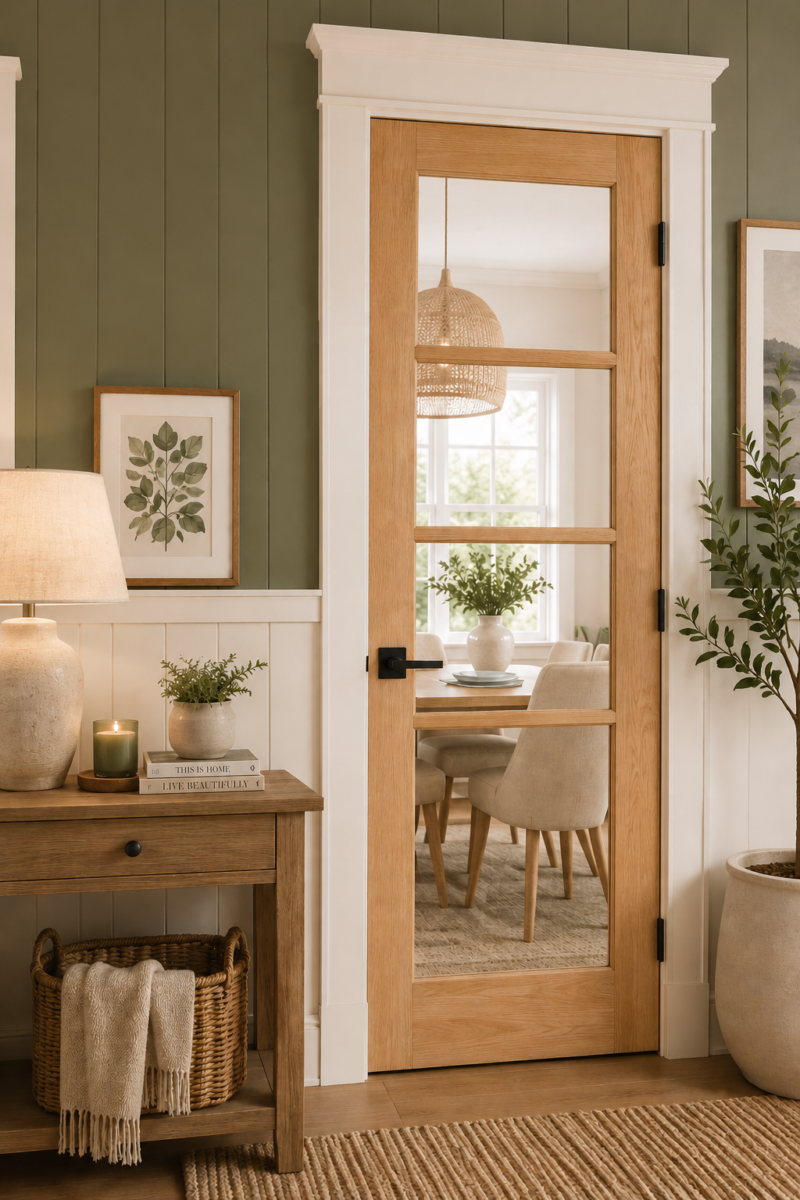
Clean-lined shaker doors such as the 2-Panel 102 profile are a natural fit within modern coastal homes. Their simple design complements the light, airy feel often associated with coastal interiors while pairing effortlessly with board and batten accent walls, picture-frame moulding, and crisp trim details. The result is a space that feels polished yet relaxed, creating a timeless look that can evolve alongside changing décor and design preferences.
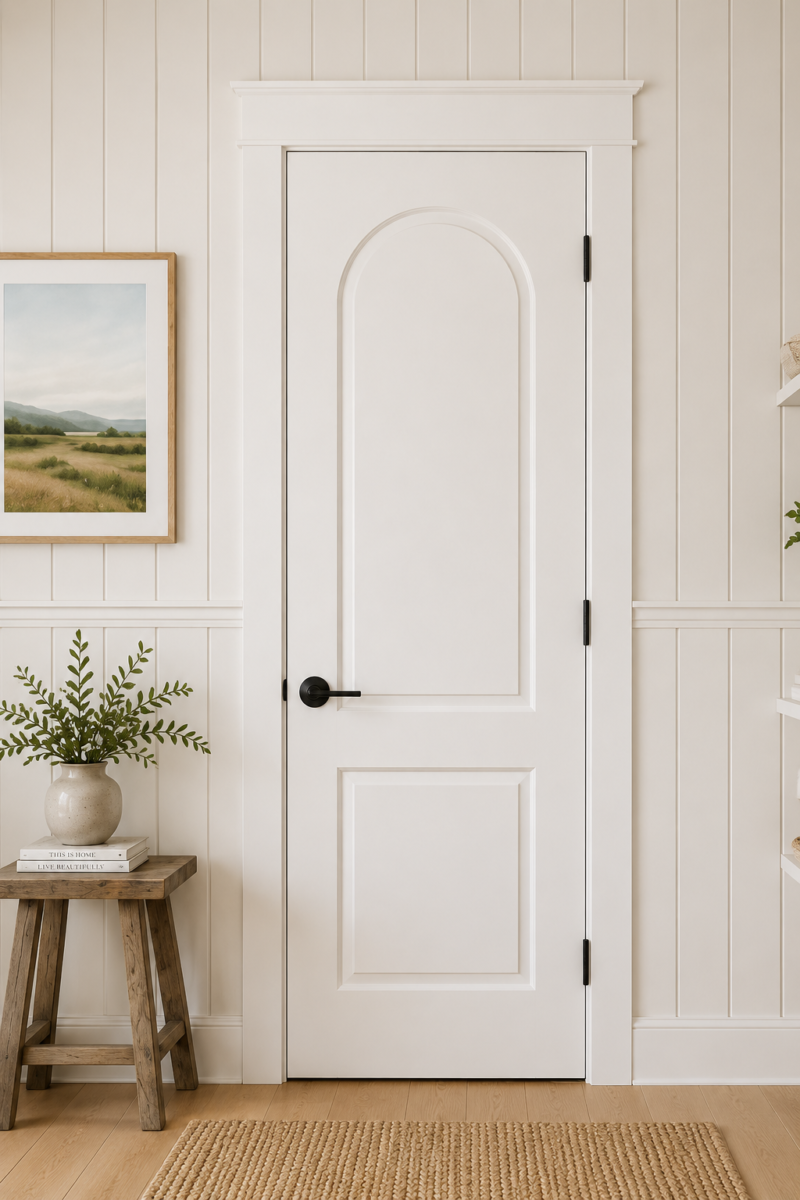
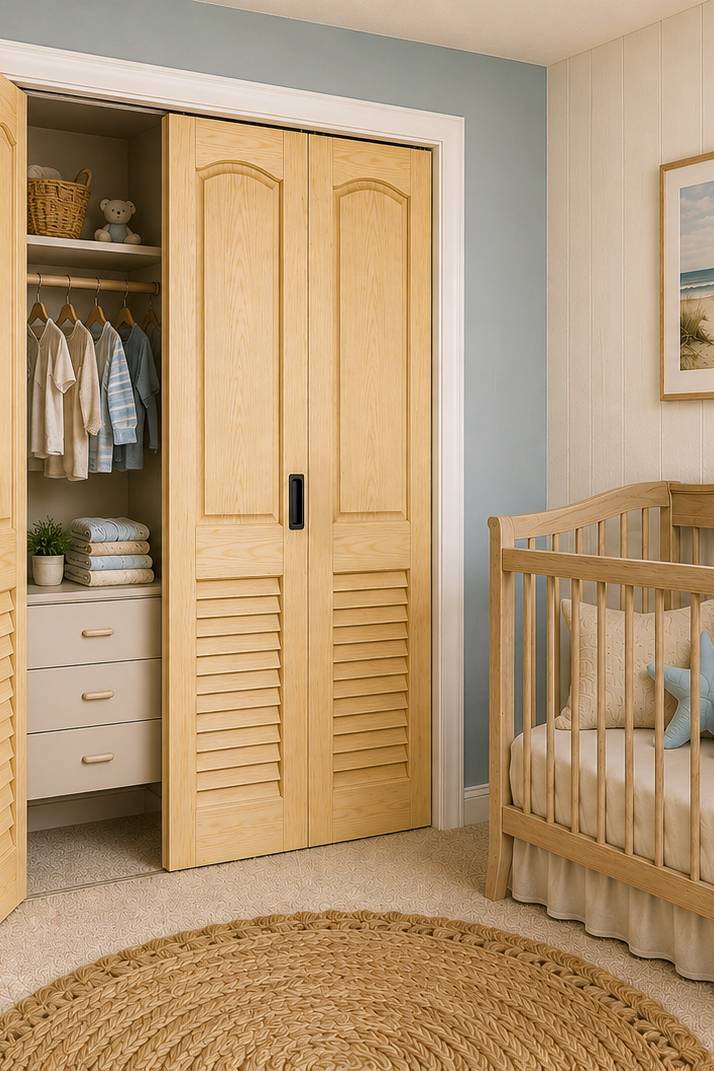
A traditional cottage-inspired coastal aesthetic often embraces softer architectural details that add warmth and character. The 5570 profile, with its two-panel arch-top design, introduces gentle curves that complement beadboard, wainscoting, and other classic coastal millwork applications. These subtle details help create the inviting charm often associated with seaside cottages and waterfront retreats, where comfort and character go hand in hand.
Louvered doors have long been associated with the relaxed nature of coastal living. A style such as the PF782 BF combines the clean appearance of a single-panel door with the texture and visual interest of louvers, making it a natural choice for laundry rooms, closets, mudrooms, and secondary spaces. When finished in a crisp white or primed for a custom paint color, louvered doors contribute to the bright, breezy atmosphere that continues to define many coastal-inspired homes.
Classic East Coast and New England-inspired interiors often showcase architectural details that feel both timeless and rooted in tradition. The 107 5-panel profile reflects this character through its balanced proportions and understated detailing. Paired with shiplap walls, substantial window casing, and wider baseboards, this style helps create interiors that feel established, welcoming, and designed to stand the test of time.
While each interpretation of coastal design brings its own personality, the most memorable spaces often share one common trait: thoughtful consistency. When doors, moulding, trim, and wall treatments complement one another, they create a sense of flow that carries throughout the home. These architectural details work together to create spaces that feel welcoming, cohesive, and connected to the relaxed spirit that continues to make coastal design so enduring.
The lasting appeal of coastal design comes from its ability to create spaces that feel both comfortable and timeless. Rooted in natural beauty and inspired by a relaxed approach to living, the style continues to evolve while remaining connected to the qualities that first made it so inviting.
Whether your home leans traditional, modern, or somewhere in between, coastal design offers endless opportunities to create spaces that feel bright, welcoming, and uniquely personal. Its versatility allows homeowners to embrace the style in ways that reflect their own tastes while maintaining a sense of warmth and connection throughout the home.
What is it about coastal design that speaks to you most? We’d love to hear which elements inspire you and see how you’re bringing this timeless style into your own spaces.
Check out our Pinterest Board for more inspirational designs and make sure to follow us on all of our social media platforms @WeAreWoodgrain