
How to Decorate with Fluted Furniture
Fluted furniture brings texture, dimension and character into a room through a series of repeating grooves. The detail is visually interesting without feeling overly decorative, making it easy to incorporate into many interior styles.
From media consoles and dining tables to nightstands and bathroom vanities, fluted details can transform an otherwise simple piece of furniture into a beautiful focal point. Whether you prefer warm natural wood or a colorful painted finish, there are plenty of ways to bring this timeless detail into your home.
What Is Fluted Furniture?
Fluting consists of repeating vertical grooves that create a textured surface. Similar designs may also be described as reeded, ribbed or grooved, depending on the shape and depth of the detailing.
The technique was originally found in classical architecture, particularly on columns and decorative woodwork. Today, fluting has been reimagined for contemporary interiors, adding an architectural quality to furniture, cabinetry and walls.
Because the pattern is simple and repetitive, it can introduce texture without making a room feel busy. Light and shadow move across the grooves throughout the day, giving even a single-color piece more depth.
Make One Piece the Focal Point
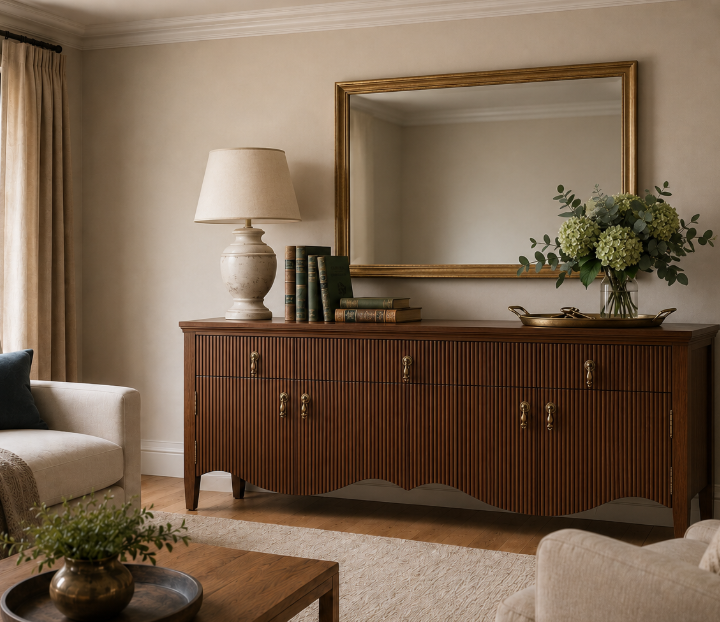
A large fluted piece can become a natural focal point within a room. Media consoles, sideboards, dressers and cabinets provide enough surface area for the detailing to make a noticeable impact.
Allow the fluted design to stand out by surrounding it with simpler furniture and décor. A warm wood console can add character to a neutral living room, while a painted sideboard can introduce a subtle pop of color.
Keep the styling on top of the furniture thoughtful and uncomplicated. A lamp, piece of artwork and a few decorative accents will complement the texture without competing with it.
Add Shape with Fluted Tables
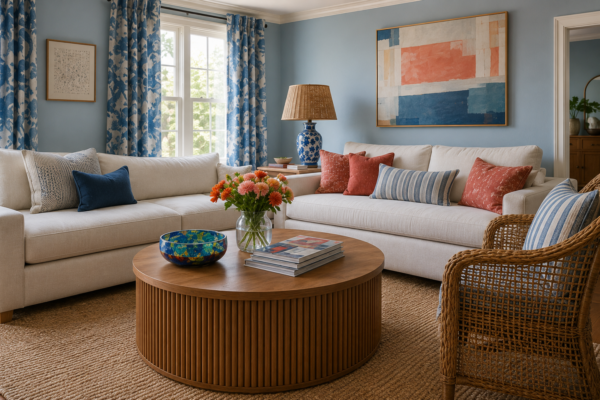
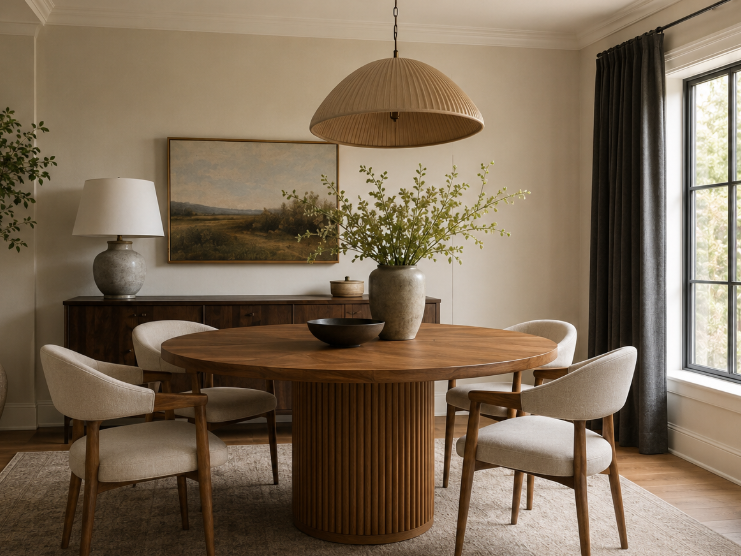
Fluted detailing looks especially beautiful on curved furniture. A round dining table or coffee table with a fluted pedestal base combines soft curves with structured vertical lines.
In a dining room, a fluted table can provide a strong centerpiece while still allowing chairs, lighting and artwork to contribute to the overall design. Natural wood creates a warm and relaxed atmosphere, while a darker or painted finish can give the room a more dramatic look.
A fluted coffee table offers the same effect on a smaller scale. Pair it with comfortable seating, a soft area rug and simple accessories to create a living room that feels inviting and balanced.
Introduce Fluting in Smaller Ways
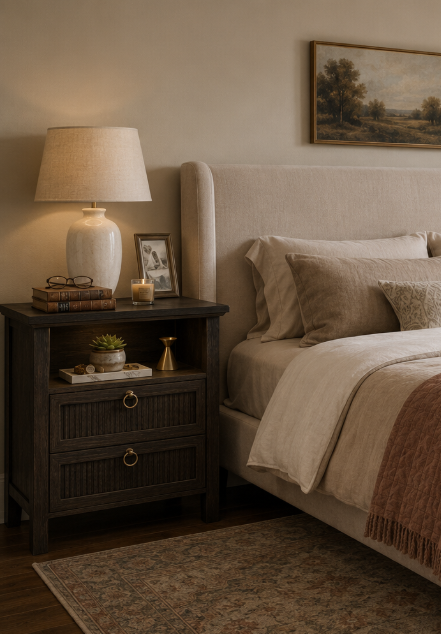
Fluted furniture does not always need to be the largest element in the room. Nightstands, end tables, accent cabinets and bathroom vanities offer an approachable way to experiment with the detail.
Smaller pieces can add texture to spaces that might otherwise feel flat. A pair of fluted nightstands can bring subtle symmetry to a bedroom, while a fluted vanity can make a bathroom feel more custom and refined.
These pieces are also a good choice when a room already contains other patterns or architectural features. The vertical grooves provide interest while remaining understated enough to work alongside wallpaper, artwork and decorative moulding.
Pair Fluting with the Right Materials
The materials surrounding fluted furniture can completely change how it feels. Natural wood paired with linen, woven textiles and stone creates a warm and organic look. Glass and metal accents can give the same fluted design a more modern appearance.
Color also plays an important role. Cream, taupe and natural wood tones keep the look soft and timeless. Deep green, navy or charcoal can make the detailing feel rich and sophisticated, while lighter colors help create a bright and relaxed space.
Try to repeat one or two materials or colors elsewhere in the room. Coordinating the furniture finish with a picture frame, light fixture or decorative accessory will help the fluted piece feel connected to the overall design.
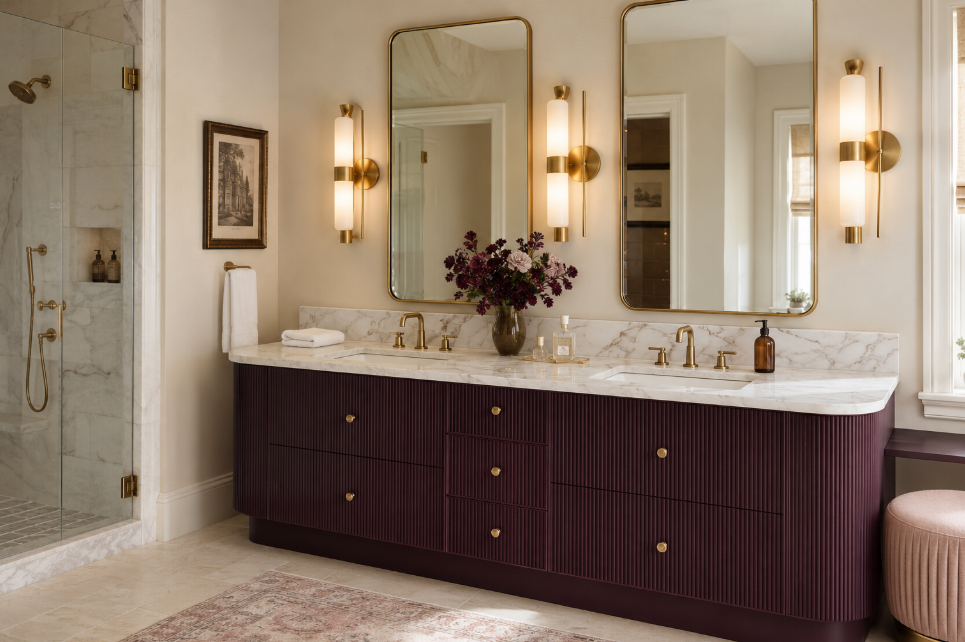
Bring Fluted Details Beyond Furniture
Fluting can also be incorporated through cabinetry, wall treatments and architectural accents. A fluted feature wall can create visual height, while decorative moulding can introduce the same repeating texture on a smaller scale.
Using fluted furniture alongside moulding and trim allows the details to complement one another throughout the room. The key is to vary the scale and keep the remaining finishes balanced so the space does not feel overly textured.
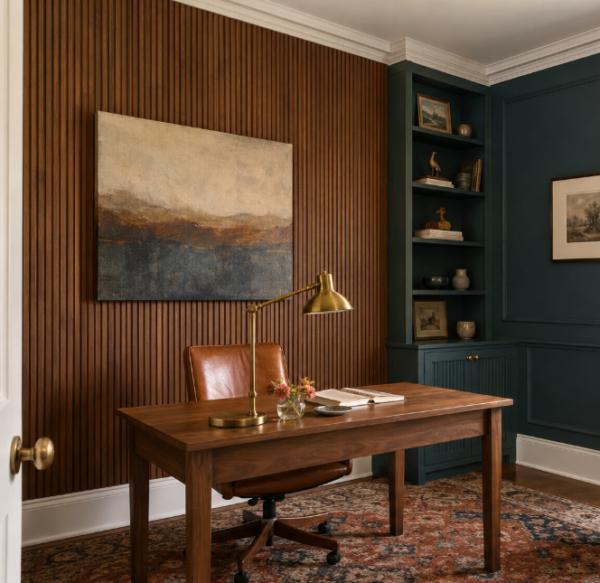
Whether used on a statement console, a rounded table or a small accent piece, fluted detailing adds depth without overwhelming the room. Its clean lines and architectural character make it a versatile choice that can feel both current and timeless.
For more tips and home inspiration, follow us on Instagram, Pinterest and Facebook! @WeAreWoodgrain